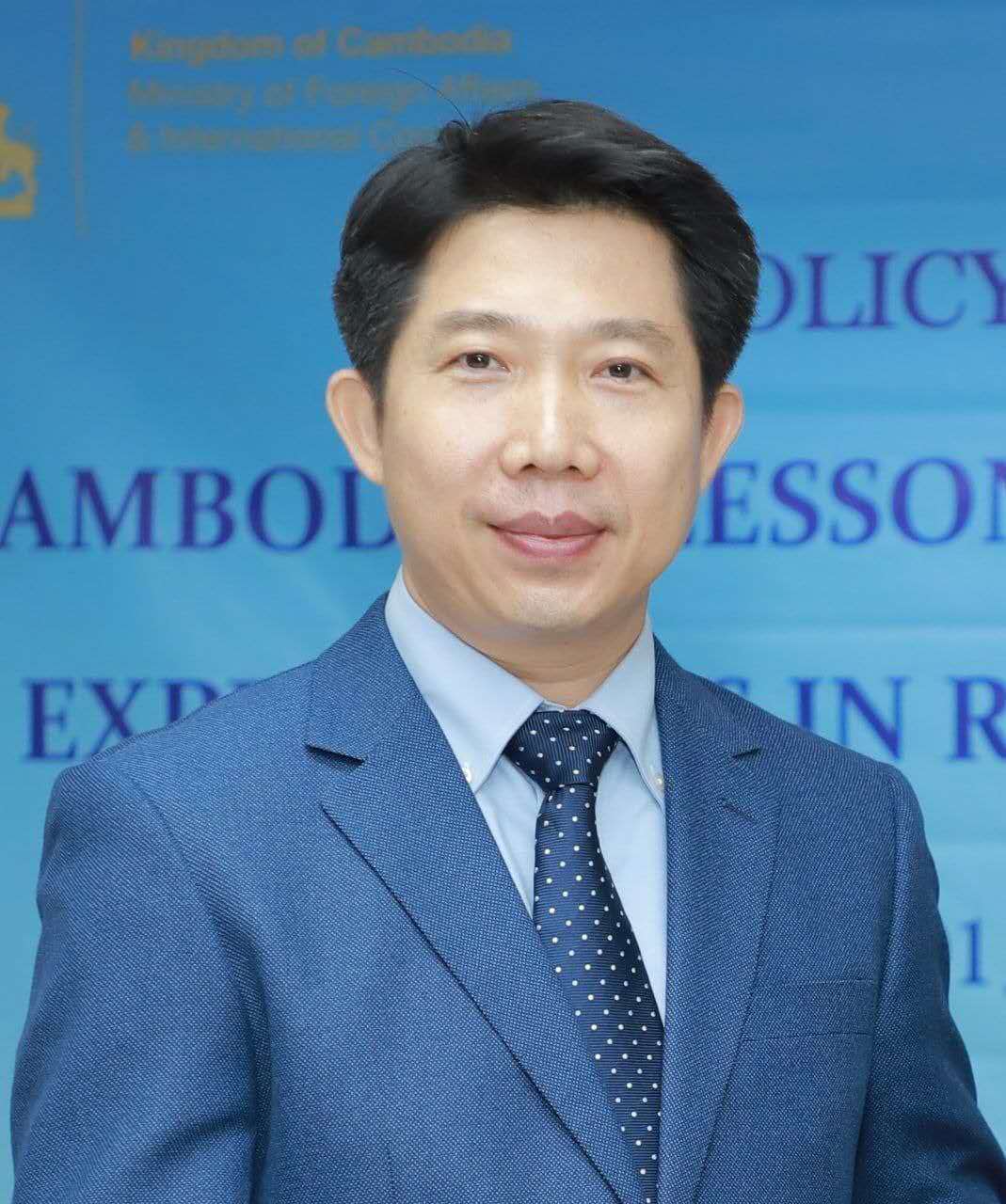
Chheng Kimlong, PhD President of Asian Vision Institute (AVI)
The friendly exchanges between China and Cambodia are deeply rooted in history. Recently, PhD Chheng Kimlong, President of Asian Vision Institute (AVI), granted an exclusive interview to Guangzhou Daily. He provided recommendations and forward-looking perspectives on deepening China-Cambodia economic and trade cooperation, enhancing the efficiency of Cambodian agricultural imports to China, and strengthening cultural-tourism collaboration between China and Cambodia as well as Guangdong Province and Cambodia.
Question: China's state-owned enterprises have undertaken landmark projects in Cambodia, such as the National Stadium. In which key areas do you believe Cambodian and Chinese enterprises could prioritize collaboration?
Chheng Kimlong: Investment in sectors such as smart deep-sea port or smart multi-purpose sea port and its digital infrastructure including logistics, security and containers management is of paramount importance. Moreover, it is vital that Guangdong province share expertise and experience with Cambodia in port city development that prevails across industrial, service, tourism and agricultural trade, and also provide full support for the implementation of Cambodia-China industrial corridor in a broader strategy to strengthen Cambodia’s supply chains and industrial capacities.
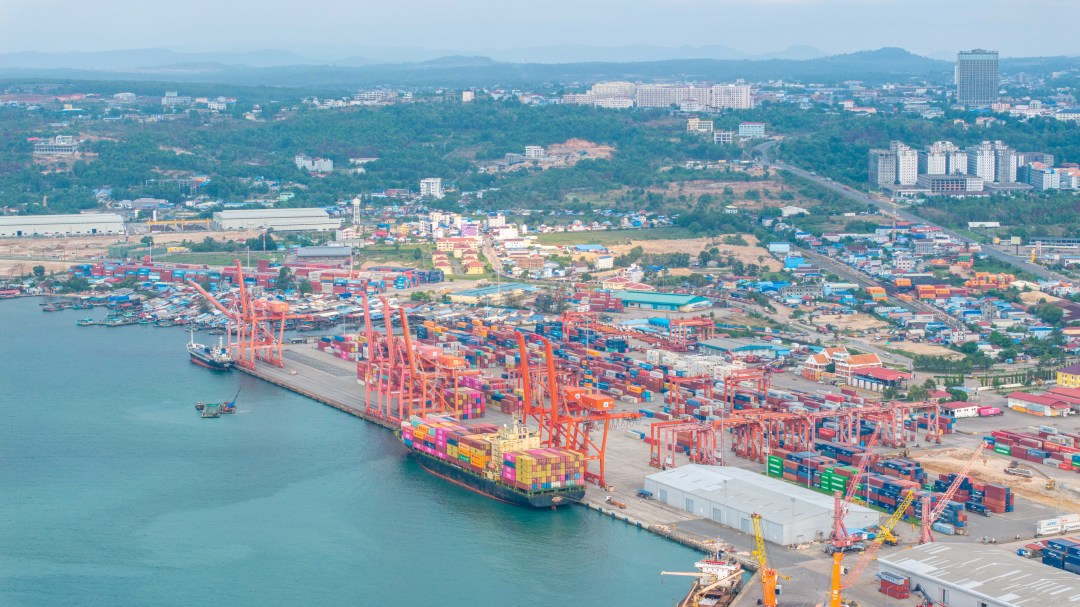
Sihanoukville Autonomous Port,Cambodia (Xinhua News Agency)
Question: A significant portion of Cambodian bananas, mangoes and other fruits exported to China are distributed through Guangzhou, but the transportation loss rate remains high. Given Guangdong Province's mature expertise in cold chain logistics, how can both sides further strengthen cooperation in agricultural product imports to address this challenge?
Chheng Kimlong:The Cambodia-China Free Trade Agreement (CCFTA) has expanded the market for Cambodian products into China and has promoted investment inflows into Cambodia and the two-way trade more possible.
As far as shipping and transportation are concerned, logistics and border customs procedures hold the key to unlock the potential for expediting the shipment and for lowering the cost. Guangdong Province of China has a close proximity to Cambodia and has well-developed expertise in cold chain logistics. Therefore, Cambodia and China can further strengthen cooperation in agricultural product trade by capitalizing on the cost advantage of Guangdong’s international trade hub. On top of these, public-private-partnership or co-investment in port physical and digital infrastructure, especially smart sea port development, between the Cambodian government and Guangdong Province of China should be considered to improve the shipping efficiency.
Question: What recommendations do you propose to strengthen cultural-tourism collaboration between China and Cambodia as well as Guangdong Province and Cambodia?
Chheng Kimlong: As a matter of fact, Guangzhou and the ancient Khmer Kingdom known as Funan in Chinese appear to have had remarkably long cultural and trade relations via sea trade routes for at least over the past millennia. Therefore, reconnecting this cultural and trade corridor is of immense significance in building the Cambodia-China community with a shared future. Further more, Guangdong province of China and Sihanoukville or Kampot province of Cambodia are encouraged to establish sister city relations, to forge closer and more meaningful economic, trade and cultural relations given their similarities and priorities.
Source: Guangzhou Daily
English author & editor: Wen Junhua
 打开广州日报新花城,享受流畅体验