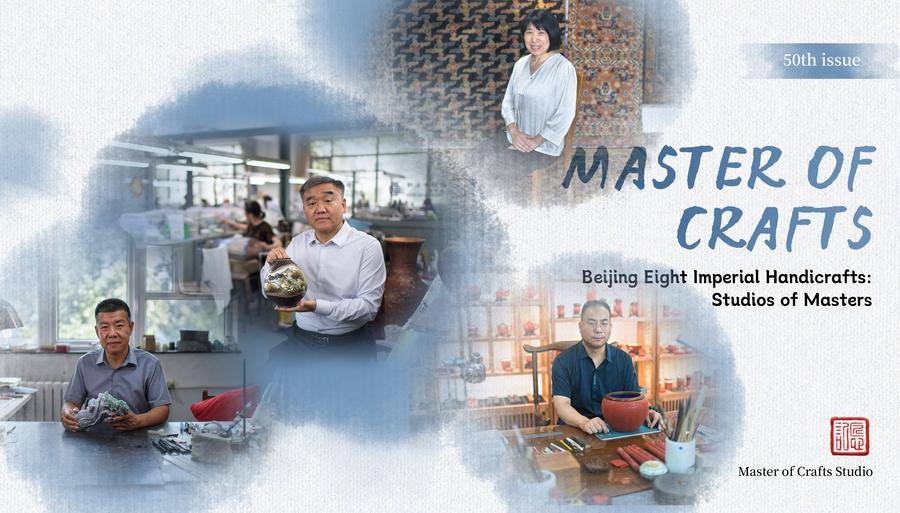
Beijing Eight Imperial Handicrafts, namely Jingtailan (Cloisonne), Carved Lacquer, Jade Carving, Palace Carpet, Gold Lacquer Inlaid, Filigree Inlaid Metal Art, Ivory Carving, and Beijing Embroidery, once reached the art peak of handicraft in ancient China when they were used only by the Royal family.
Thanks to the efforts of generations of masters, those handicrafts have been preserved well and given a new life.
Let's walk into the studios of those masters to see how they work on their art.
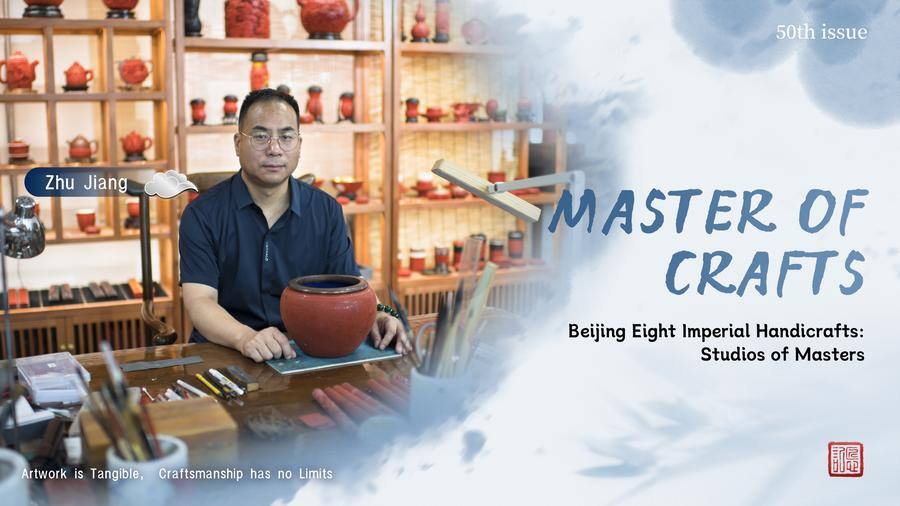
Carved lacquer, dating back to the Tang Dynasty (618-907), greeted its peak time in Ming and Qing dynasties (1368-1911). Since the founding of the People's Republic of China in 1949, Beijing and Yangzhou have become the two centers for the craft of carved lacquer, which was listed as a national-level intangible cultural heritage in 2006.
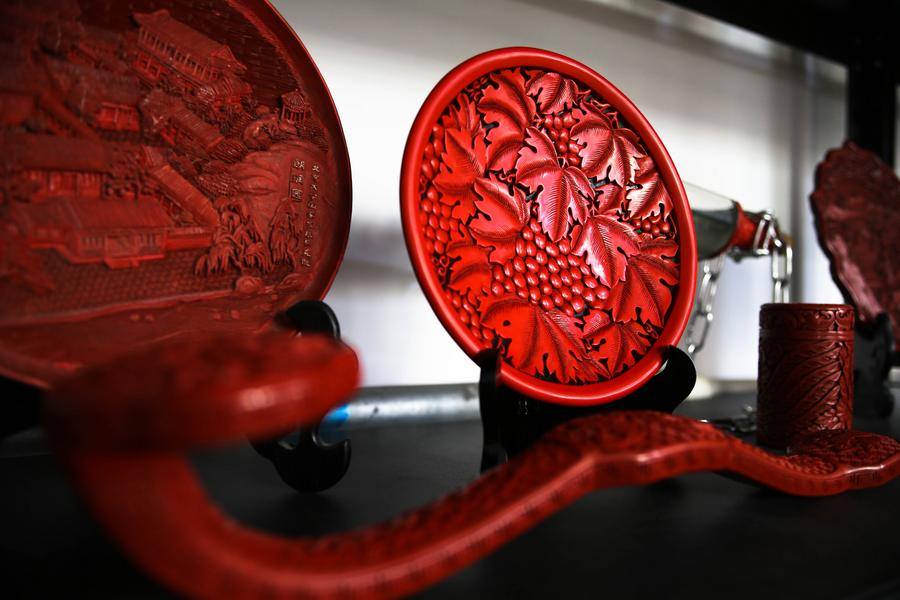
Carved lacquer artworks are displayed at Zhu Jiang's studio in Gu'an, north China's Hebei Province, May 30, 2024. (Xinhua/Zhu Weixi)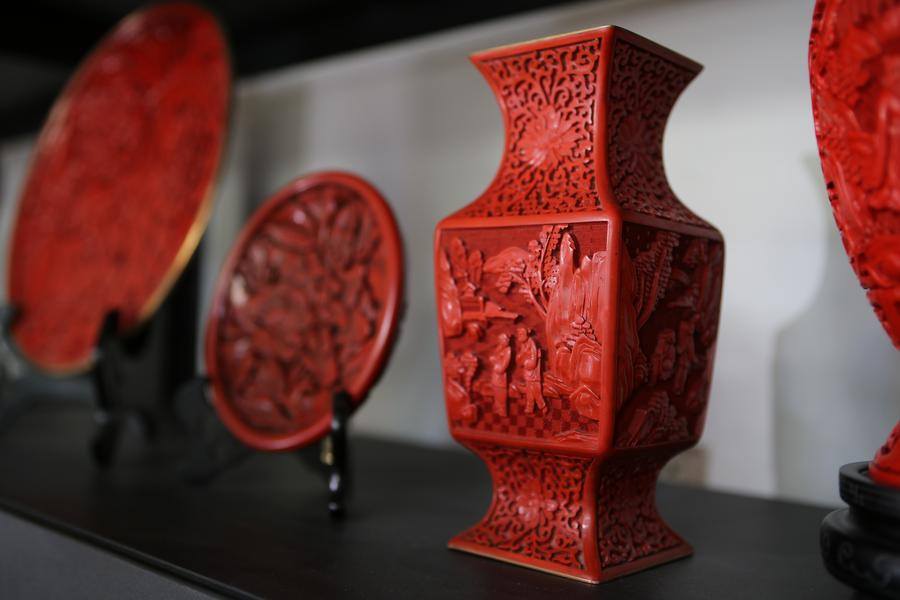
Carved lacquer artworks are displayed at Zhu Jiang's studio in Gu'an, north China's Hebei Province, May 30, 2024. (Xinhua/Zhu Weixi)
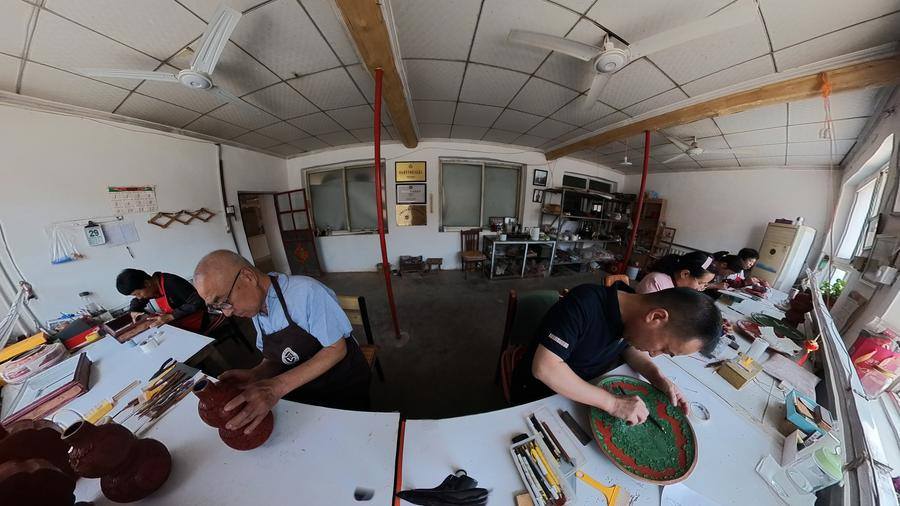
Carved lacquer differs in its colors, namely red, black or multiple colors. Its making procedures include designing, body shaping, lacquer making, coating, drawing, carving and grinding. The craftsman needs to smoothly use various kinds of knives to carve patterns on the ware, and even a little miss can destroy the whole artwork. The craft can only be grasped through three to five years of practice. Therefore, it is also called "the art of time."
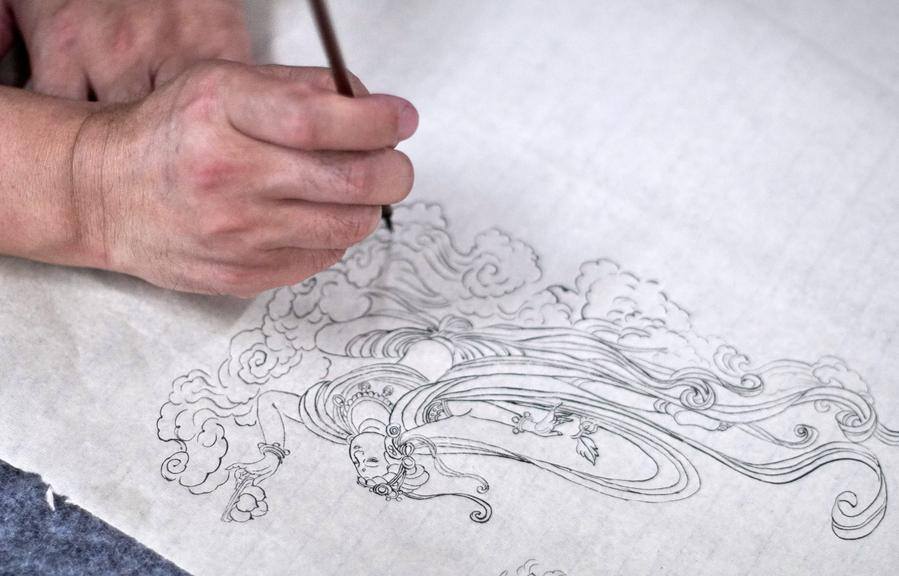
Zhu Jiang designs a piece of carved lacquer artwork at his studio in Beijing, capital of China, June 5, 2024.(Xinhua/Li Xin)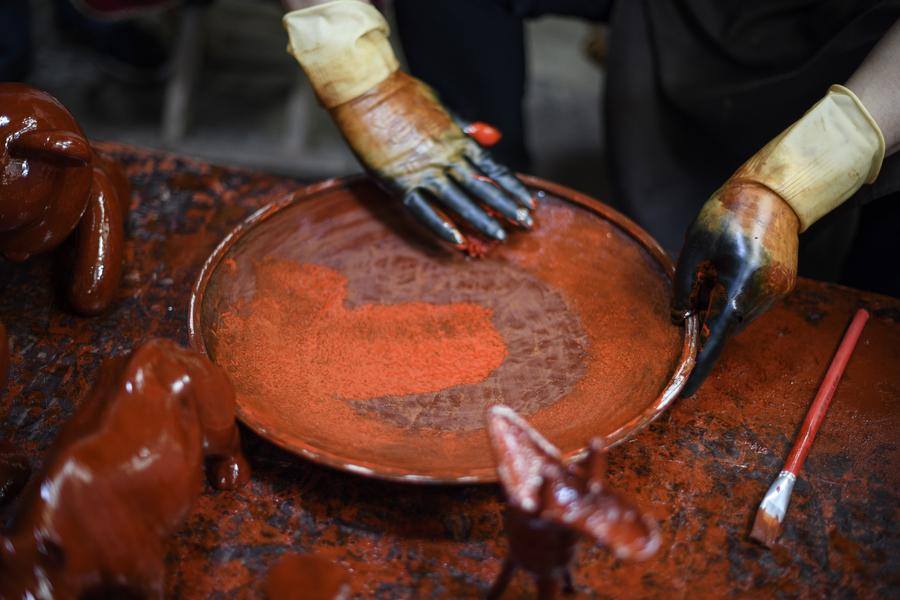
Zhu Jiang coats lacquer onto a plate at his studio in Gu'an, north China's Hebei Province, May 30, 2024. (Xinhua/Zhang Haofu)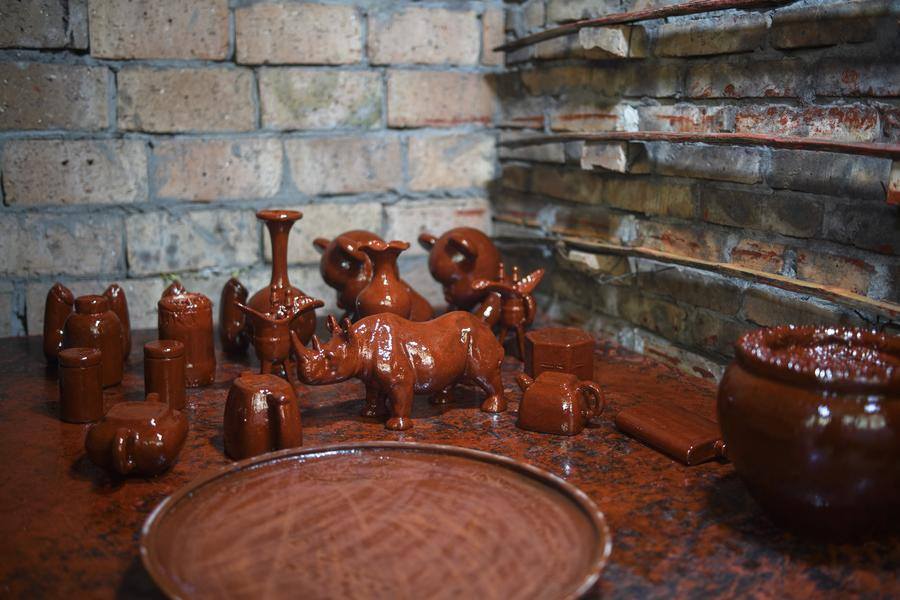
Semi-finished carved lacquer artworks are seen on drying at Zhu Jiang's studio in Gu'an, north China's Hebei Province, May 30, 2024. (Xinhua/Zhang Haofu)
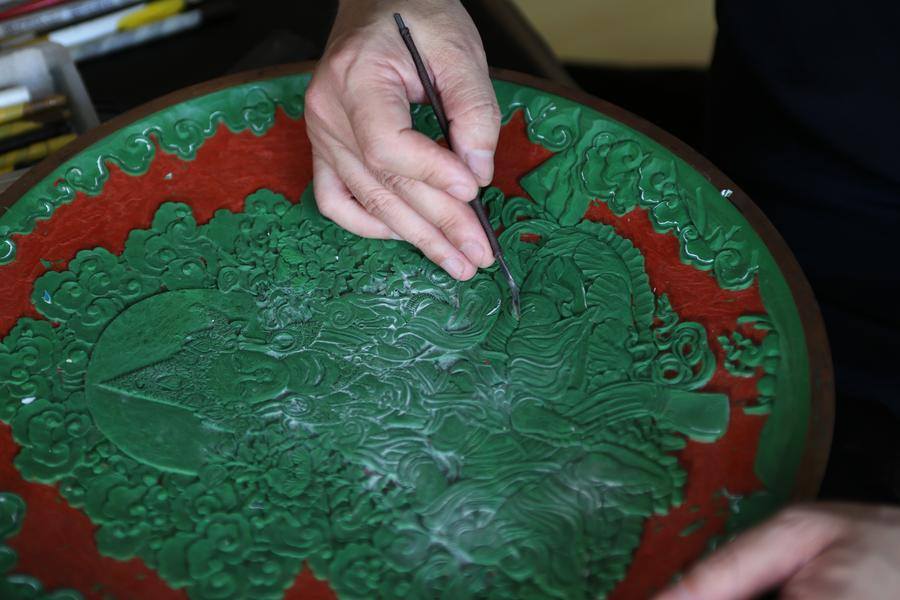
Zhu Jiang makes carved lacquer at his studio in Gu'an, north China's Hebei Province, May 30, 2024. (Xinhua/Zhu Weixi)
Born in 1976, Zhu Jiang, an inheritor of the craft of carved lacquer, learned the art from his father Zhu Qingyuan since childhood. He also took Yin Xiuyun, a Chinese master of arts and crafts and a national-level inheritor of carved lacquer making, as his teacher. For Zhu, the modern craft of carved lacquer needs to integrate the essence of the traditions with modern aesthetics and designs. The artwork should be made with a fine outlook, good utility and great fun.
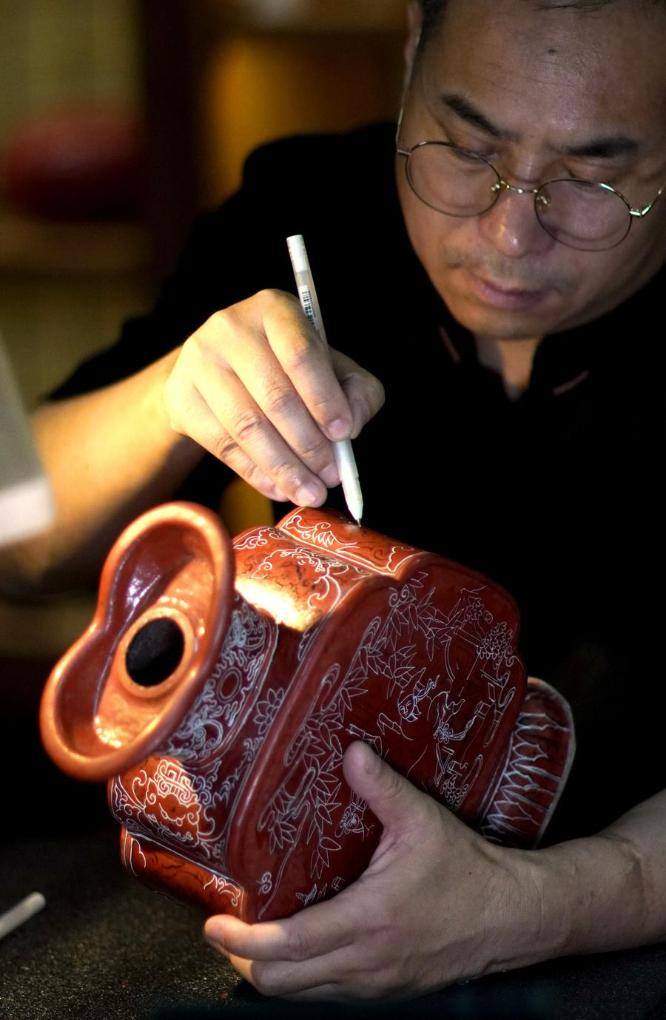
Zhu Jiang draws lines on a semi-finished carved lacquer ware at his studio in Beijing, capital of China, June 5, 2024.(Xinhua/Li Xin)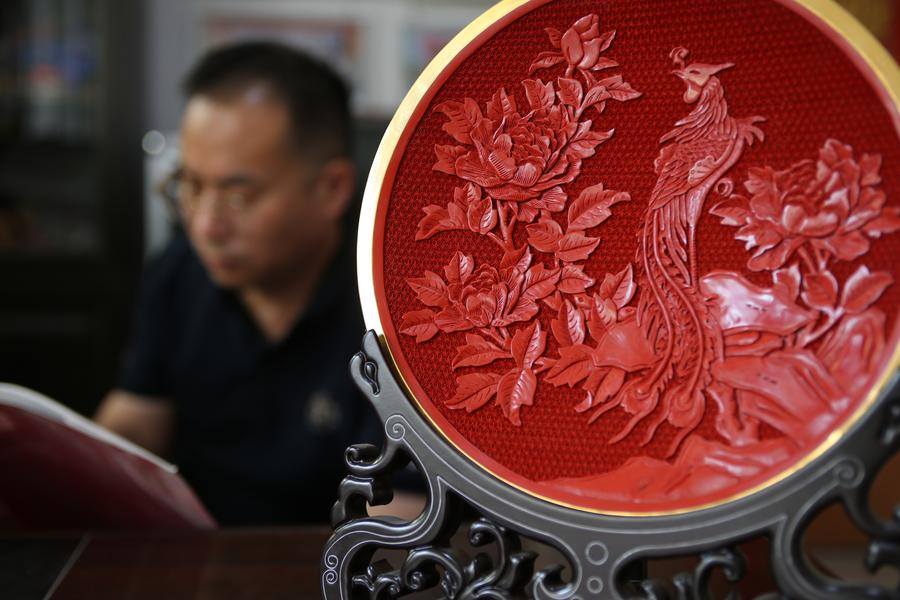
Zhu Jiang reads a book on carved lacquer at his studio in Gu'an, north China's Hebei Province, May 30, 2024. (Xinhua/Zhu Weixi)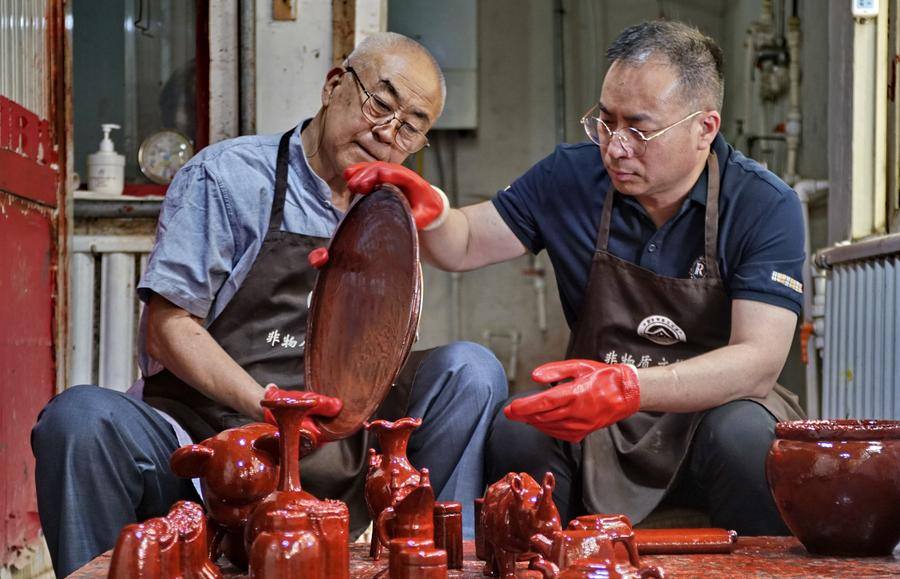
Zhu Jiang (R) and his father Zhu Qingyuan discuss lacquer coating at Zhu Jiang's studio in Gu'an, north China's Hebei Province, May 30, 2024. (Xinhua/Li Xin)
In 20 plus years of practicing, Zhu refined his skills while creating new artworks. He visited museums at home and abroad and exchanged with modern designers for new ideas. In 2017, Zhu set up a studio with students in an art institute in Langfang, where he created new styles of carved lacquer artwork such as tea sets, wedding decorations, modern toys and accessory artworks attracting youngsters.
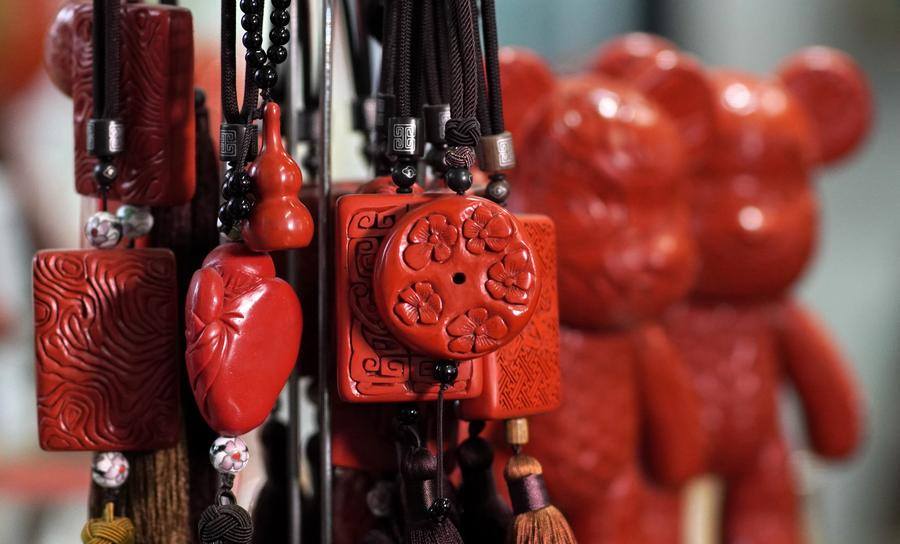
Accessories with carved lacquer are displayed at Zhu Jiang's studio in Beijing, capital of China, June 5, 2024. (Xinhua/Li Xin)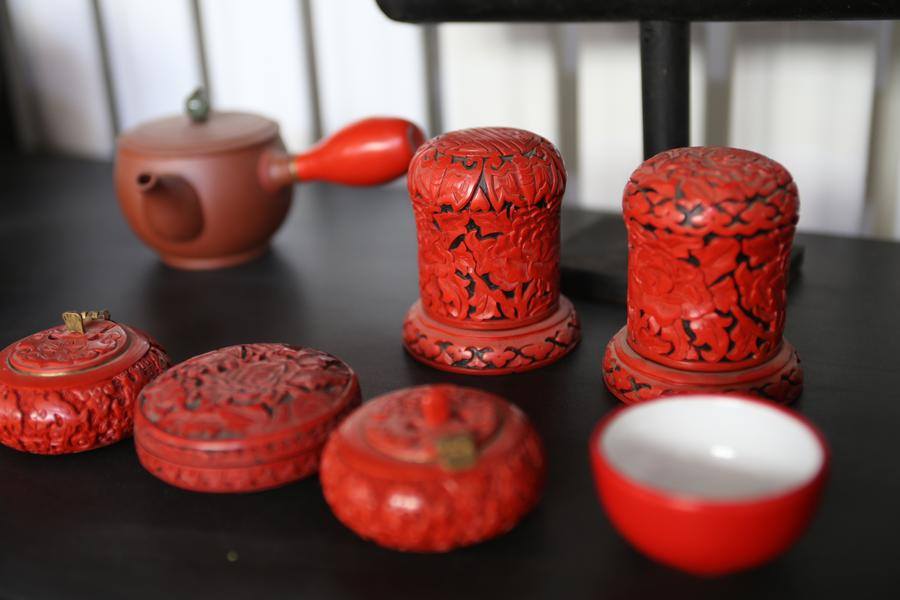
Carved lacquer artworks are displayed at Zhu Jiang's studio in Gu'an, north China's Hebei Province, May 30, 2024. (Xinhua/Zhu Weixi)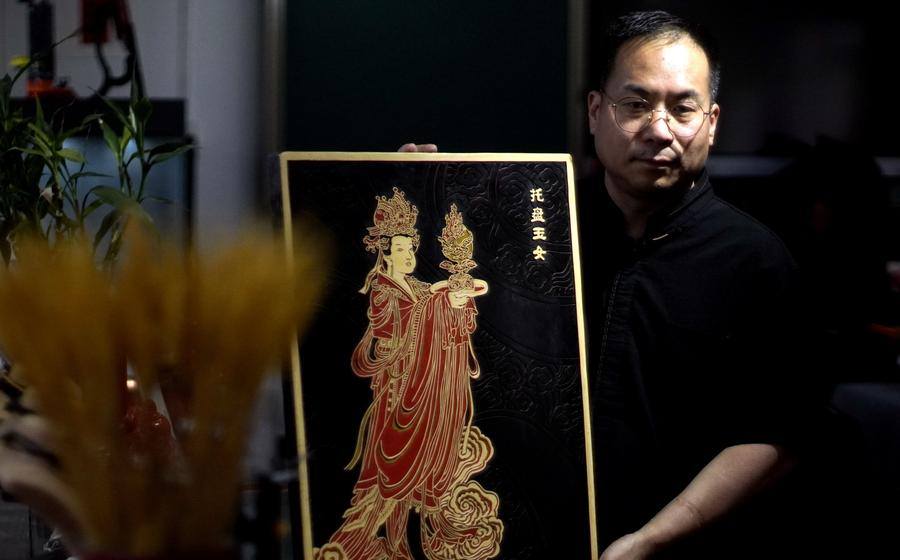
Zhu Jiang shows a piece of colorful carved lacquer artwork at his studio in Beijing, capital of China, June 5, 2024.(Xinhua/Li Xin)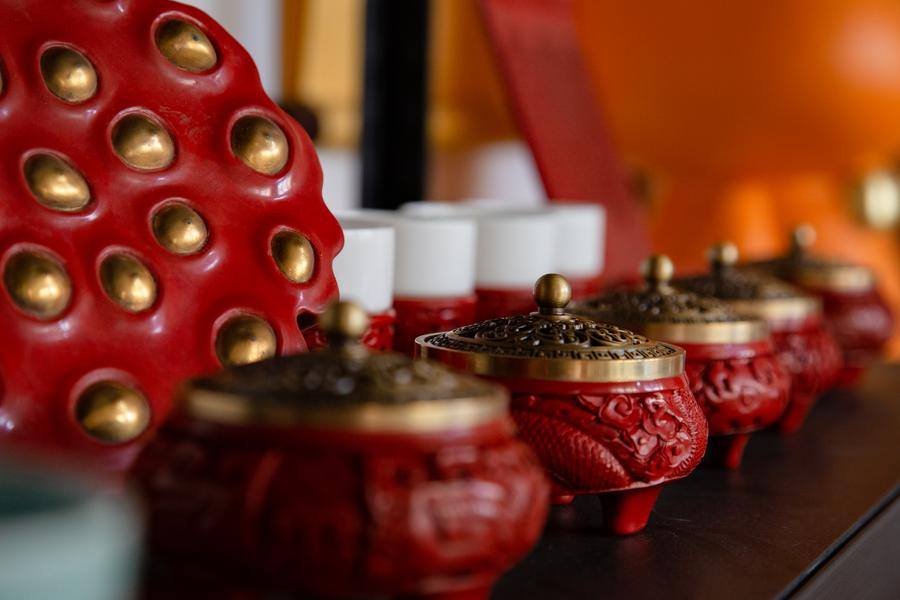
Carved lacquer artworks are displayed at Zhu Jiang's studio in Gu'an, north China's Hebei Province, May 30, 2024. (Xinhua/Tian Weiwei)
Source: China Daily
Editor: Lyu Yun
 打开广州日报新花城,享受流畅体验