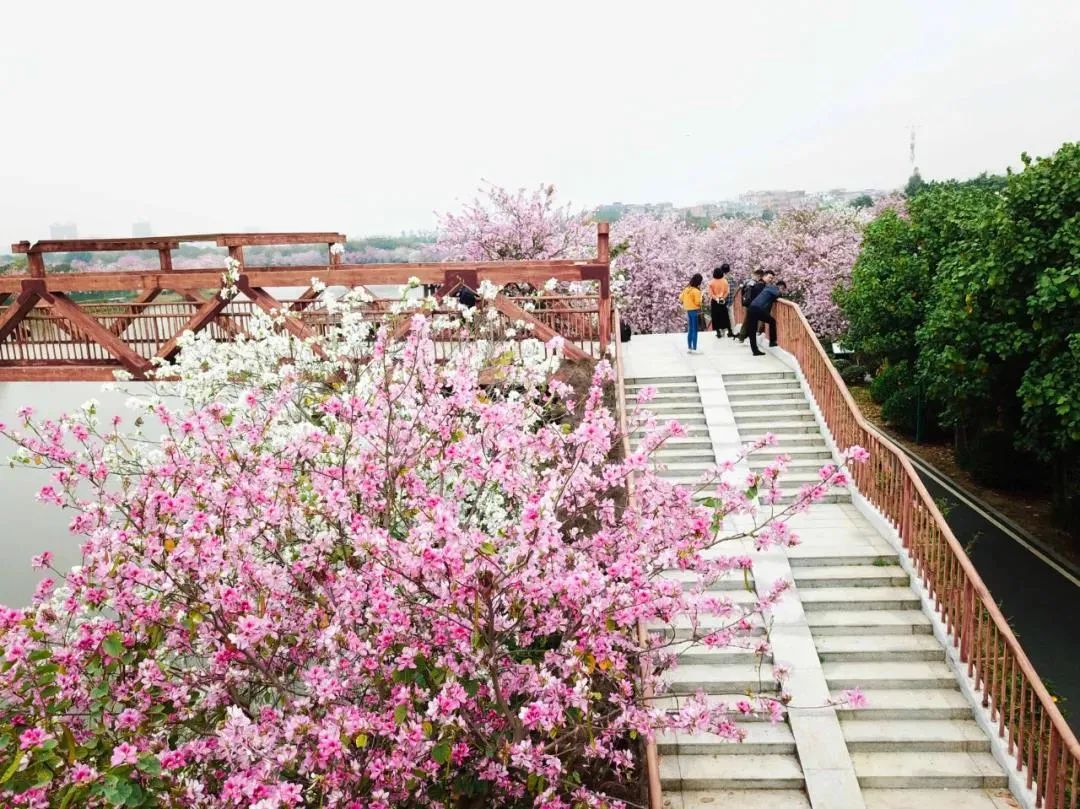
Long corridor of bauhinia flowers in Haizhu Wetland Park, Guangzhou last spring (Photo by Luo Changwei/Guangzhou Daily) 广州海珠湿地公园盛开的宫粉羊蹄甲(图源:GZPhotos/骆昌威摄)
Each year when March arrives, Guangzhou is transformed into a vast sea of flowers with light pink bauhinia flowers, yellow trumpet-shaped blooms of golden trumpet tree, cherry blossoms, bright-yellow rapeseed flowers and red kapok flaunting their beauty in the city.
每年春天的广州,不仅有宫粉羊蹄甲开满枝头,金黄色的风铃木、樱花、油菜花、木棉花等也开始争奇斗艳。这些五颜六色的花朵,将羊城装饰成一片花海,让广州成为全国最美城市之一。
In ancient times, flowers of various colors were one of the most popular decoration motifs on porcelain. Chinese craftsmen preferred to paint spring flowers on porcelain to give the wares auspicious meanings. Today, let’s check out some of vernal flower patterns on porcelain wares.
而回到古代,颜色缤纷、多姿多彩的花卉则是瓷器上的传统纹饰之一。古代匠人们在瓷器上绘以花卉,让花朵在瓷器上婀娜,让釉色在花枝间流动,同时也赋予了它们吉祥寓意。


梅花 Plum blossom

Plum blossom blooms in the depth of winter and is the first to greet spring next year.
说到最早迎接春天的花儿,当然要非寒冬斗士——梅花莫属了。
So it was traditionally seen as a sign that announces the end of winter and the approach of spring. Representing the ideal characteristics of a scholar-gentleman, plum blossom, together with the evergreen pine and bamboo, came to be known as the Three Friends of Winter.
它是一年中最后一个季节开放的花,常与经冬不凋的松树和竹子被称为“岁寒三友”,是中国传统文化中高尚人格的象征。
Meanwhile, as the earliest blooming flower of the year, plum blossom also represents renewal and vitality.
同时,梅又是来年春天第一个盛开的花,是美丽的报春花使,独放于百花之前,代表了一种生机与喜悦。
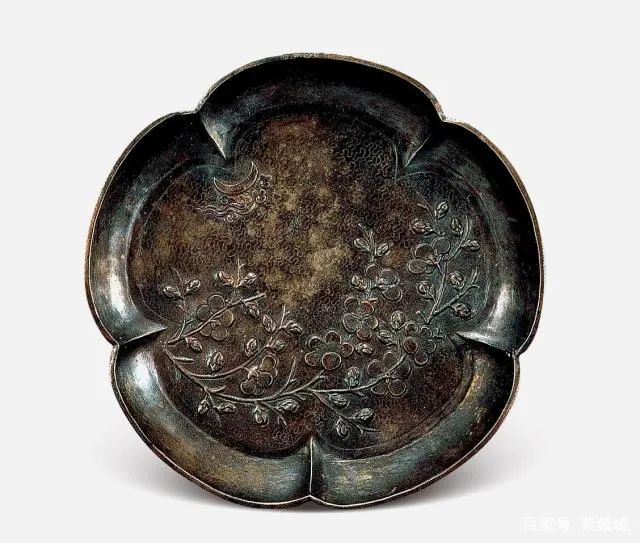
Dish with moon and plum blossom patterns, Song Dynasty, housed in Nanjing Museum 宋·梅月纹银盘,南京博物院藏 (图源:百家号/紫禁城)
Appreciation of plum blossoms began in the Qin and Han dynasties, as different kinds of plum trees had been recorded in The Miscellaneous Records of the Western Capital(Xijing zaji), a collection of short semi-historiographical stories from the court of the Former Han Dynasty.
自秦汉开始,人们就开始学会欣赏梅花之美。汉代《西京杂记》记载:“汉初,修上林苑,远方各献名果异树,有朱梅、胭脂梅。”
Also thanks to the high praise from great poets of different dynasties, plum blossoms have been particularly favored by Chinese people.
隋唐至五代,品梅之风更加盛行,李白、杜甫、柳宗元、白居易等大家的诗流传南北,从此,一枝梅影深入人心。
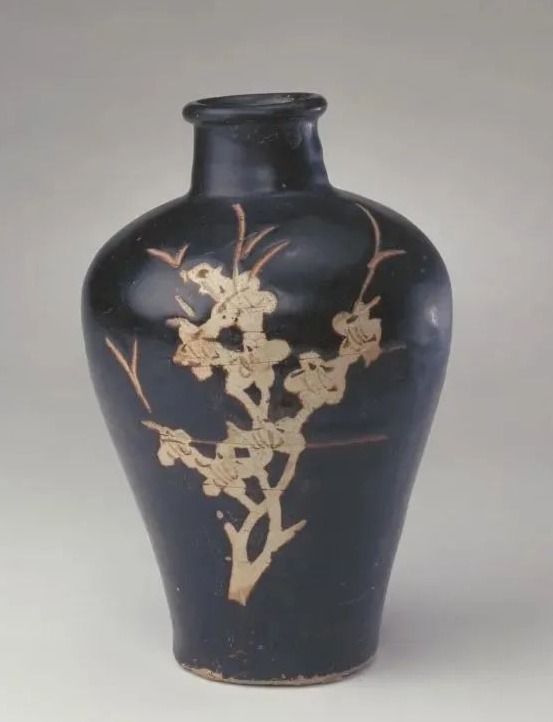
Black-glazed meiping carved with flower pattern made in Jizhou Kiln, Jiangxi province, Song Dynasty 宋·吉州窑黑釉剔花梅瓶
Since the Tang and Song dynasties, plum blossoms were depicted everywhere, from clothing, furniture to vessels. Meiping, or prunus vase, a type of Chinese pottery featuring a small mouth, a short, narrow neck, a plump bosom, and a concave belly, was even developed to hold a single branch of plum blossoms.
自唐宋后,梅花印记开始逐渐遍布到人们生活之中,时常被装饰在服饰、家具、酒器上。宋代还出现了以“梅”为名的瓷器——梅瓶,是一种小口、短颈、丰肩、瘦底、圈足的瓶式,以口小只能插梅枝得名。
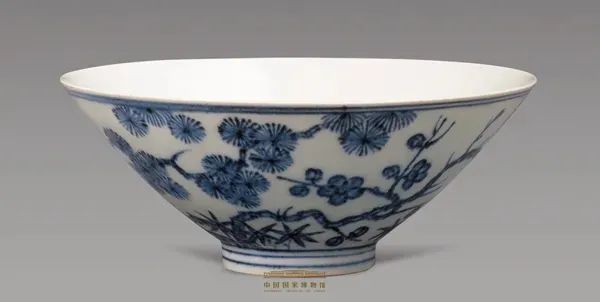
Blue and white bowl with pine, bamboo and plum blossom patterns, Ming Dynasty, housed in the National Museum of China 明·青花松竹梅纹碗,中国国家博物馆藏
Plum blossom motif also became a popular theme in Chinese pottery because of their elegant appearance and symbolic meanings. For example, the flower, with five petals, are believed to symbolize five blessings—health, wealth, longevity, happiness and virtue.
装饰在瓷器上的梅花图案更是数不胜数,还被赋予了各种各样的寓意,例如,梅花五瓣象征“五福”:福、禄、寿、喜、才。
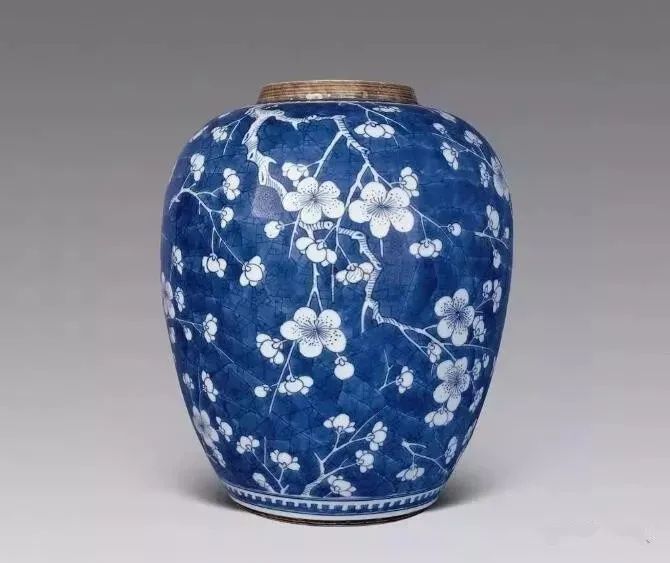
Blue and white pot with plum blossom motif, during the reign of Emperor Kangxi of the Qing Dynasty 清康熙·青花冰梅纹罐
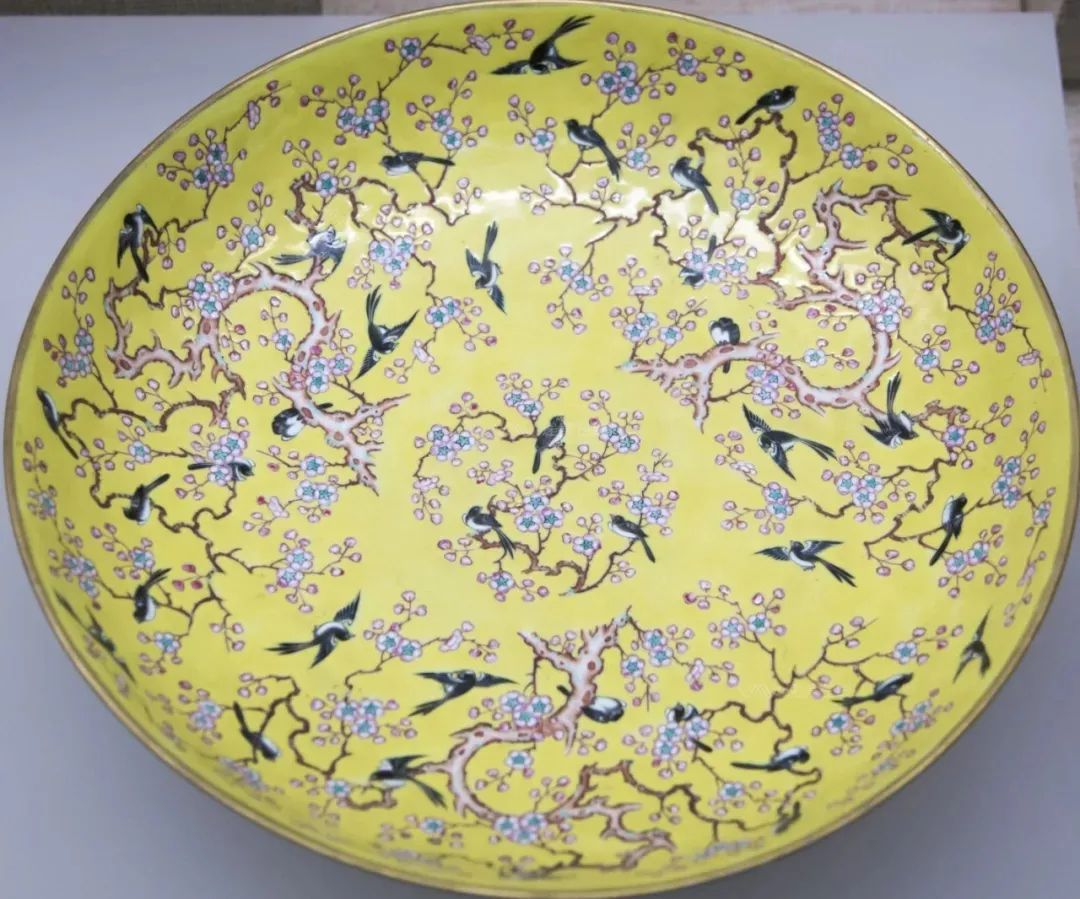
Plate with design of magpies and plum blossoms in famille rose over a yellow ground, during the reign of Emperor Tongzhi of the Qing Dynasty, housed in Guangdong Museum 景德镇窑清同治款·粉彩黄地喜鹊登梅图盘,广东省博物馆藏


迎春花 Winter jasmine

Winter jasmine is a shrub that produces bright-yellow flowers from around February to April. Since it blooms earlier than most of the spring flowers, it is called yingchun in Chinese, which means "the flower that welcomes spring."
欣赏完梅花,就真的迎来春天啦,此时迎春花就要映入眼帘了。迎春花,有清香,金黄色,外染红晕,因其在百花之中开花最早,花后即迎来百花齐放的春天而得名。
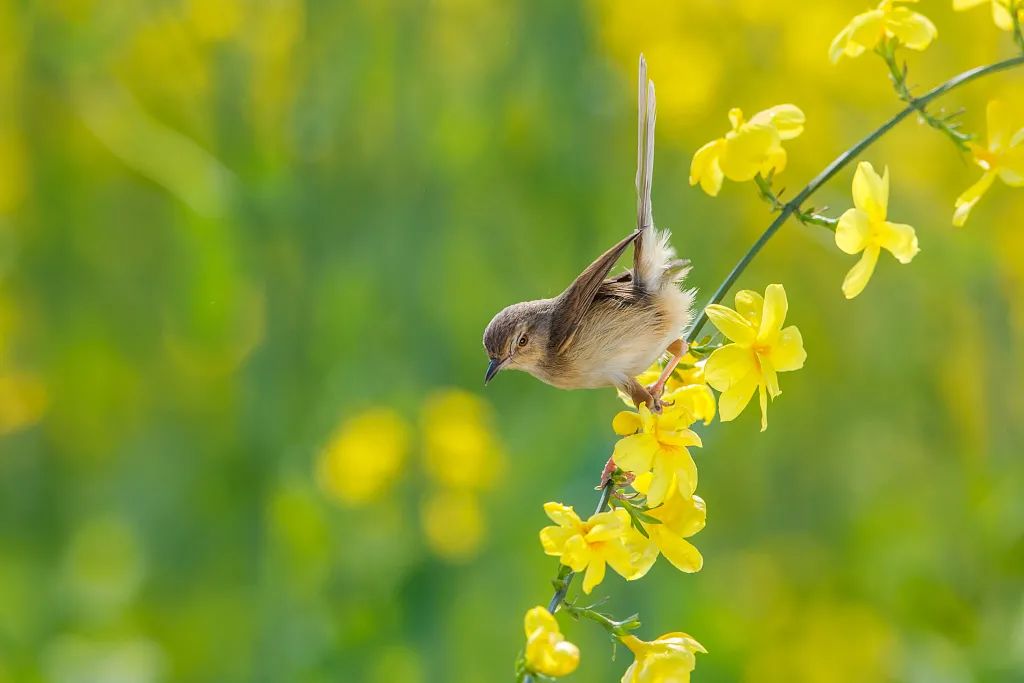
A bird stands on winter jasmine branch.(Photo/CGTN)一只小鸟伫立在一枝迎春花上 。
The plant has a history of more than 1,000 years in China. The ancient Chinese named the winter jasmine and three other flowers, plum flower, narcissus and camellia, the Four Friends of Snow.
迎春花与梅花、水仙和山茶花统称为“雪中四友”,是中国常见的花卉之一。其栽培历史有1000余年,唐代白居易诗《代迎春花召刘郎中》以及宋代韩琦《中书东厅迎春》和明代周文华撰《汝南圃史》均有记载。
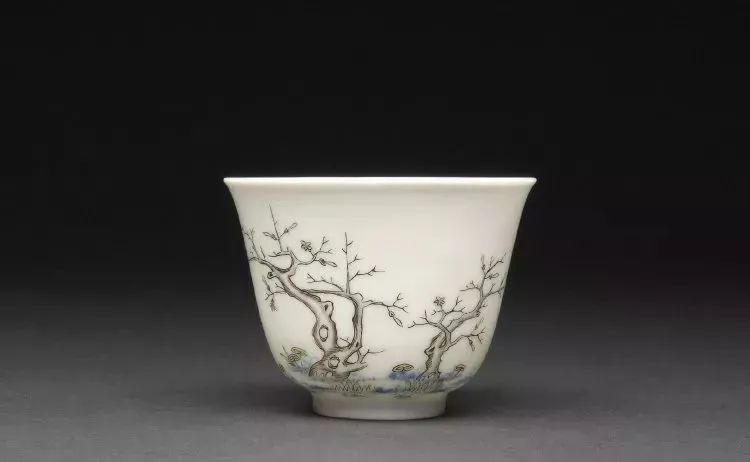
Polychrome cup with design of winter jasmine, during the reign of Emperor Kangxi of the Qing Dynasty 清康熙·五彩十二月花卉杯之一月“迎春花”杯
Known for its high tolerance of the cold and fast growth, the beautiful climbing vine is a symbol of spring and beauty and is favored by Chinese people. Thus it is often seen decorating porcelain wares.
迎春花不仅花色端庄秀丽,气质非凡,而且具有不畏寒威、不择风土、适应性强的特点,是春天和美好的象征,历来为人们所喜爱。在传世的各种瓷器上也时时可以看到这种花儿俏丽的“倩影”。


杏花 Apricot blossom

Entering March, the majestically beautiful pinkish-white apricot blossoms arrive with spring.
到了阳春三月左右,我们就能看到美轮美奂的杏花啦。
Native to China, apricot, or “杏花”(xinghua) in Chinese, was cultivated in the country as early as in the Warring States Period and was mentioned in Guanzi (《管子》), one of the largest collections of ancient Chinese writings named after Guan Zhong, the famous Chinese philosopher and statesman who served as Prime Minister to Duke Huan of Qi (齐桓公) in the Spring and Autumn Period.
 杏花是古老的花木,原产中国。成书于战国至秦汉时期的《管子》中就有记载,在中国已有两三千年的栽培历史。
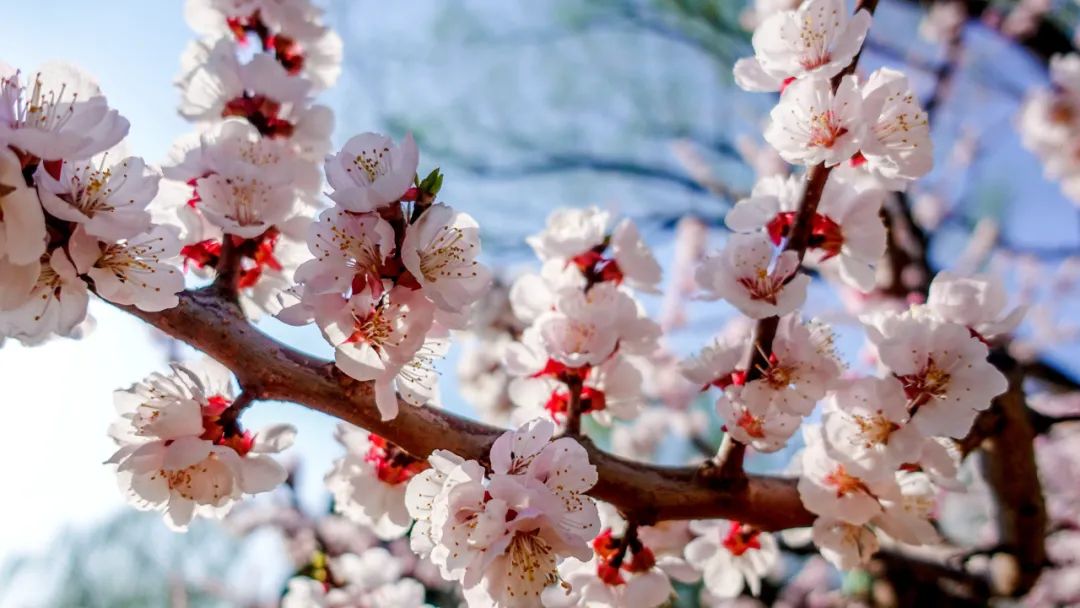
Apricot blossoms(Photo/CGTN) 杏花
In ancient China, people seemed to think highly of apricot flowers because "杏(xing)" is a homonym for "幸" which means happiness. The ancient Chinese also associated apricot with education and named it "jidihua" as well. Jidi(及第) means passing an imperial examination.
古代以杏花为贵,因为“杏”谐音“幸”,象征幸福。此外,杏花在古代还有一个别称叫“及第花”,因为唐代新科进士正式放榜之日恰好就在农历三月初三上巳节之前,此时正值杏花开放。
Back in the Tang Dynasty, the imperial examination result would be released around the Shangsi Festival which fell on March 3rd on the Chinese lunar calendar, the right time when apricot trees came into full bloom in Qujiang(present-day Qujiangchi Site Park in Xi’an). The banquet for successful candidates of the palace examinations would be held in the garden and was known as the Spring Banquet in the Apricot Grove(xinglin chunyan, “杏林春宴”).
当时,凡新科进士及第,先要一起在曲江(今西安曲江池遗址公园)一带游宴庆祝,那里有一处名为“杏园”的著名花园,然后登临大雁塔(今西安市南的大慈恩寺内),并题名塔壁留念。时人称进士为“杏园客”,这场盛会也叫“杏园宴”或者“杏林春宴”。
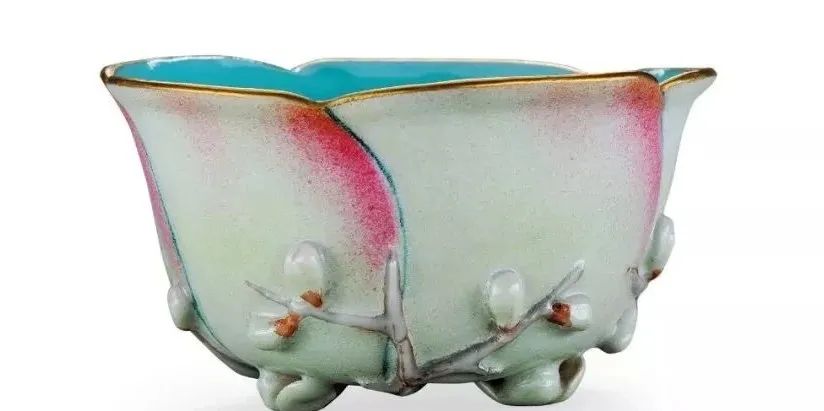
Famille rose cup in the shape of apricot flower, during the reign of Emperor Qianlong of the Qing Dynasty 清乾隆·粉彩花瓣形小杯
Porcelain made in the Qing Dynasty often was inscribed with the Chinese characters "杏林春宴", or decorated with motifs of the same theme—a pair of swallows flying beside a willow and a blossoming apricot tree. The word for swallow, or "燕 (yan)" sounds the same as the word "宴(yan)" meaning banquet, in Chinese. "May you enjoy the Spring Banquet in the Apricot Grove" is another way of wishing people to pass the imperial examinations successfully.
清代瓷器上常题写“杏林春宴”的款识或绘有以“杏林春燕”为主题的纹饰。这一类主题纹饰通常以一株花朵正在盛放的杏树为主,并结合绿柳、飞燕等元素一起呈现。“燕”,既可表示春天的季节,也因谐音“宴”,可表示“宴会”。
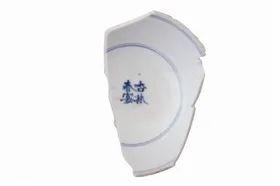
Porcelain shard inscribed with characters “杏林春宴” “杏林春宴”是康熙瓷器纹样中的一个著名款识。
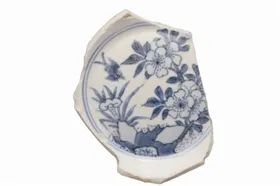
Porcelain shard with a motif depicting a pair of swallows flying beside a blossoming apricot tree. “杏林春燕”是康熙年间瓷器的重要纹饰。
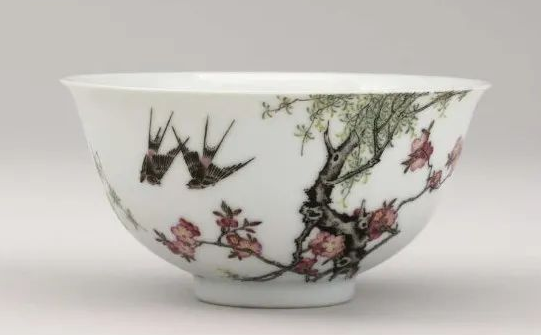
Enamelled bowl with a motif of xinglin chunyan, Qing Dynasty, housed in the British Museum 清乾隆·珐琅彩杏林春燕图碗,大英博物馆藏

Author: Yuan
Supervisor: Lv Yun
Editor: Lv Yun
Source: GZ-Maritimesilkroad (丝路云帆Silu Yunfan), official Wechat account of City Alliance for the Preservation and world Heritage Inscription of Maritime Silk Road Heritage