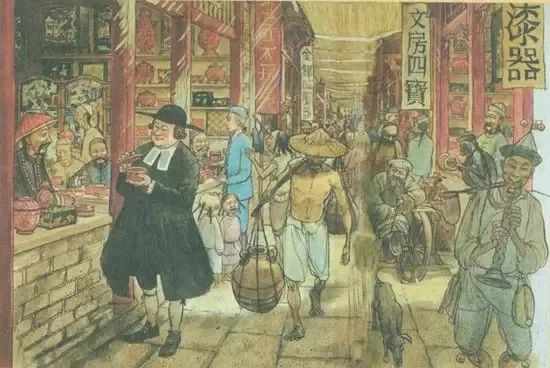
A foreign merchant was strolling on a street in Canton (Guangzhou), from The Secret File of Foreign Merchants in the Qing Dynasty published by Jiuzhou Press. 一名外商在广州街市闲逛,图片采自九州出版社《清朝洋商秘档》。

Each year during the Spring Festival before the epidemic outbreak, Guangzhou will see millions of migrant workers leave for their hometown and a large number of tourists, including foreigners, flow in for holiday. In 2018, the city witnessed over 360,000 passenger trips from overseas, of which nearly 53% involved foreigners, according to the data released by Guangzhou Tourism Bureau in February that year.
“新冠”疫情爆发以前,春节期间的广州,既见证了超大规模的返乡人群,又是不少人的度假目的地。这其中就包括了不少外国游客。2018年2月,广州市旅游局发布的数据显示,2018年春节期间,广州共接待境外游客36.14万人次,其中,外国游客共19.13万人次,占比近53%。
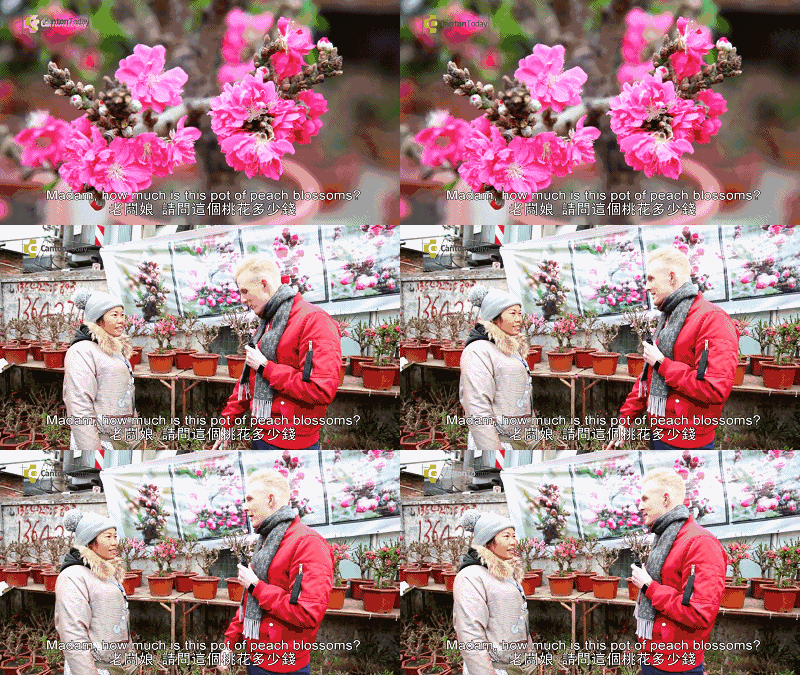
A foreigner was visiting a flower fair in Guangzhou during the Spring Festival in 2018. 2018年春节,一名外国人在逛广州花市。
Over a century ago, a bunch of westerners also spent the Spring Festival in Canton (Guangzhou) though in a more monotonous way. Despite dilemmas as well as a lack of freedom in some way, they still managed to enjoy a bit of the Chinese traditional holiday.
一百多年前,也有一群外国人曾在广州度过春节。和今天相比,他们的过节方式相对单调,也不那么自由,但其中仍不乏一些有趣的故事。
Now let's travel down the memory lane to see how westerners celebrated the Spring Festival in Canton in the late Qing Dynasty.
让我们一起迈入通往清朝的时光隧道,感受当年属于“歪果仁”的广州春节。

Canton (Guangzhou) became the only port open to westerners in 1757, but there were very few foreign faces in town at that time. It's said that only 307 male foreigners lived in Canton in 1836, many of whom were merchants in the firms of the Thirteen Hongs.
1757-1842年,正值广州“一口通商”时期。这时,在广州的外国人并不多,据1836年的统计,侨居广州的有307位外国男性,主要是十三夷馆里的商人。
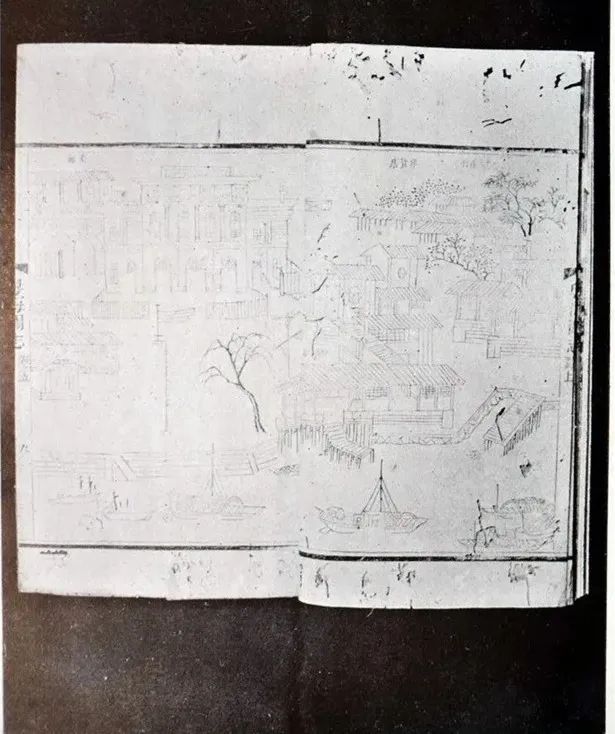
A sketch of the street view of the Thirteen Hongs during the reign of Emperor Daoguang in the Qing Dynasty. 绘于道光年间的十三行街景草图
With the Spring Festival approaching, they followed the Chinese custom, closed all accounts and started to prepare for the Chinese New Year, as the city entered a festive atmosphere. They would receive greeting posts from tailors, shoemakers, carpenters and blacksmiths. Their Chinese peers and tongshi (通事, interpreters in diplomatic affairs) and caretakers of ships would pay New Year's call to them in person, bearing gifts like well-packed tea, exquisite crape and scarf produced in Nanking (Nanjing) along with multifarious dried fruit.
中国的农历新年期间,他们跟着中国人一起放假了,而且按照中国人的习惯,在年底把帐目都结清了,然后开始接受别人的拜年。商馆的裁缝、鞋匠、木匠、铁匠递来了贺帖,中国行商、通事们,还有为他们照料船艇的僮仆等则亲自来拜年。
As a result, foreigners in Canton at that time looked forward to the festival a lot since they could either take the gifts back home or sell them for money.
外商们不但可以放假,还有礼收,比如包装讲究的上等茶叶、精美的南京绉纱、围巾,还有一桶桶干果,如橘饼、荔枝干等。这些礼物既可带回国当礼物送人,又可以卖掉换钱,令外商们十分期待。
'Gong hei fat choy'(恭喜发财), a blessing commonly heard among Cantonese during the Spring Festival nowadays, had already been circulating at that time.
而如今风靡全国的新春祝福语“恭喜发财”也早在那时就流行开了。
According to The Fankwae at Canton written by William. C. Hunter, a partner of Russell & Co. in the Thirteen Hongs, 'Gong hei fat choy'(恭喜发财) was how Cantonese-speakers wished others a happy new year—literally meaning "wish you to make a fortune in the coming year".
十三行旗昌洋行的合伙人、英国人威廉· C·亨特据自己的所见所闻,写了一本叫《广州番鬼录》的书。其中有一段写道:“在清代,广州十三行一些吃洋务饭的中国人,每逢过年时,都会到洋人的商馆里去拜年,一进门便不停讲着‘恭喜发财 ’。”

Some western merchants were even invited by their Chinese associates to their mansions for a New Year's feast. Hunter himself, for example, was treated with the utmost hospitality by the elder son of Wu Bingjian, a renowned tycoon in the Thirteen Hongs.
另外,一些外商还会受邀到中国行商的家中享用新年大餐,比如亨特就曾在新年期间被邀请至十三行巨鳄伍秉鉴的长子家做客,受到盛情款待。
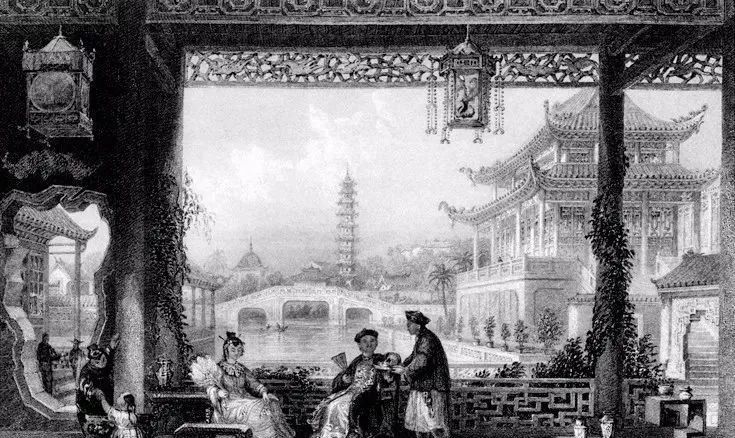
The garden of the Wu Clan painted on The Illustrated London News 《伦敦新闻画报》中的伍家花园,年份不详

Authors: Yuan, Liuliu
Supervisor: Lv Yun
Editor: Lv Yun
Source: GZ-Maritimesilkroad (丝路云帆Silu Yunfan), official Wechat account of City Alliance for the Preservation and world Heritage Inscription of Maritime Silk Road Heritage