
Hoi Tong (or Haichuang) Monastery portrayed in an export painting in the Qing Dynasty 清代外销画中的海幢寺

In Spring Festival holidays, foreign merchants also loved to go outing and enjoyed warm weather and spring blossoms, which however, could be a bit difficult to accomplish, as the imperial court exercised strict management over them.
春暖花开的新年假期,外商们最向往的便是结伴外出游玩。但这一看似平常的愿望却不易实现,因为清政府对外商的管理极为严格。
During their four-to-six-month stay in Canton (Guangzhou) every year, these westerners were required to dwell in the Thirteen Hongs and forbidden to wander beyond Jackass Point (牡驴尖), a public wharf set up along the Pearl River for the foreigners.
每年,外商在广州城大约要居住4-6个月。这期间,十三行,是外商在广州唯一的居住地。他们住在商馆的时候,不能走到比牡驴尖(馆区广场珠江边为洋人设置的公共码头)更远的地方。
But there were times when they were given temporary freedom. During 1794 to 1795, they were allowed to visit Huadi (today's area around Bai E Tan) as well as the Garden of the Chen Clan twice a month.
当然也不是完全不能外出。乾隆五十九至六十年间(1794年—1795年),根据留粤英商波朗的禀求,经两广总督长麟批示,准许留在广州的外国人每月出外闲游两次,但只限在花地(原名花埭,位于今珠江白鹅潭畔)和陈家花园(具体位置已不可考)两处。
The policy was adjusted in 1816, which allowed them to wander to two designated venues—Hoi Tong (or Haichuang) Monastery and Huadi— three times a month, in a group of less than 10 people. Meanwhile, drunken brawls and spending the nights away from their residences were both banned. They would also be accompanied by a tongshi (通事) in case of any accidents.
嘉庆二十一年(1816年)之后,两广总督蒋攸铦又作出批示,改成每月初八、十八、二十八日三次,但每次限十人,地点也改成了海幢寺和花地,不准饮酒滋事,也不能在外过夜,而且要有一名通事跟着。
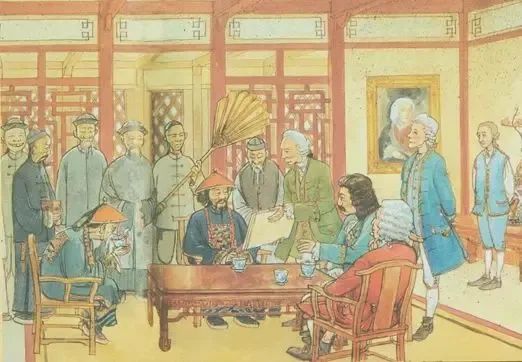
The negotiation between Chinese officials and westerners, from The Secret File of Foreign Merchants in the Qing Dynastypublished by Jiuzhou Press 商馆里的中外交涉,图片采自九州出版社《清朝洋商秘档》
During the Spring Festival, merchants of the Thirteen Hongs gathering in Huadi came from different countries/regions, such as Britain, America, the Netherlands, Spain and Portugal. They might be business competitors, but during the holiday, they would put business aside and enjoy the festival together in harmony.
在花地的新年聚会,参加的外商,有英国人、美国人、荷兰人、西班牙人和葡萄牙人。虽然平时他们之间是竞争的关系,但在节日的氛围里,又同是远离家乡的游子,受到同样的约束,彼此之间倒是相处得很和谐。
Foreigners also would seize every possible opportunity to have fun, such as writing invitations, a procedure hotly anticipated by most of the merchants.
这些“老外”还很会玩。外出游玩前,他们会发出请柬,抓住每一个细节来取乐。大部分外商都踊跃参加。
For example, an Irish man named Pat once received two invitations, of which one was from Hunter. He replied and asked Hunter to write ten poems to show his sincerity otherwise he might accept the other invitation instead. Hunter took the reply so seriously that he earnestly composed ten poems.
有一位叫帕特的爱尔兰人先后收到了两份邀约,其中一份便是由亨特发出的。
于是他回复亨特道:“好吧,亲爱的,我接受邀请,但有一个小条件,你要用庄严的旋律,赋诗十首,带着“外柔内刚的格调”,你若惹我生气——帕特我就跟他们走。”
亨特也认真对待这一回复,真的写了十首小诗全力邀约。其中一首是这样的:“于是,我们摆脱单调的行号事务,还有分类帐和函件簿,丁当响的银元,一包包的生丝,通事、看银师,以及所有船员。”
To show his excitement for the upcoming trip, Pat also drew up a menu for an "imaginary feast" for the trip, in which delicacies like cubilose soup, assorted fish and flavoured mutton from Nanking (Nanjing) were mentioned, which also hinted that Canton was already a City of Gastronomy then.
帕特也不甘示弱,为花地游玩那天拟出了丰盛的“虚拟”餐单:“按照惯例,我们的新年宴会,开始时我们喝燕窝汤,吃白鸽蛋;鲳鱼和鳎鱼,然后继以鲱鱼,炒鸡蛋,还有一道菜是需要的:来自南京的调味羊肉;瑞伯制作的来自河南岛(今海珠区)的肥鸡。”(注:瑞伯是一名为旗昌洋行服务了三十多年的主厨。)
尽管这份菜单并没有被兑现,却能看出当时的广州已经是一座美食之都。

A row of buildings in the Thirteen Hongs in 1844 十三行的一排商馆,1844年
As female westerners were prohibited to enter Canton at that time, only male foreigners could be seen in the city. In 1830 when some British merchants broke the rule, serious conflicts broke out between foreigners and Qing officials, and the imperial court threatened to suspend trade with Britain. In the following year, no more western ladies could be seen in the city, and firms of the Thirteen Hongs became base camps for foreign bachelors.
当时的清廷还严令禁止“番妇”(外国女性)进入广州。然而,1830年,英商曾不顾禁令公然携妇入商馆,清廷便以停止贸易相威胁,双方一度剑拔弩张。到了1831年,留在广州的外国人就都是男性了,十三行商馆成了外籍单身汉的大本营。

A glass painting depicting two western ladies who were forbidden to enter Canton in the Qing Dynasty, 1780 1780年左右的玻璃画,图中是禁止入粤的西洋女性。
Over 100 years ago during the Chinese New Year, foreign merchants led a pent-up life in Canton (Guangzhou) without the company of their families. Somehow with all the restrictions, they still managed to make time out of work to enjoy the festival in the oriental city and took every opportunity to have fun.

一百多年前的农历新年假期,在广州的外商们,没有家人的陪伴,受到诸多约束,但他们还是暂时抛开工作,享受广州的美景、美食和节日文化,努力寻找着自己的快乐。

Author: Yuan, Liuliu
Supervisor: Lv Yun
Editor: Lv Yun
Source: GZ-Maritimesilkroad (丝路云帆Silu Yunfan), official Wechat account of City Alliance for the Preservation and world Heritage Inscription of Maritime Silk Road Heritage