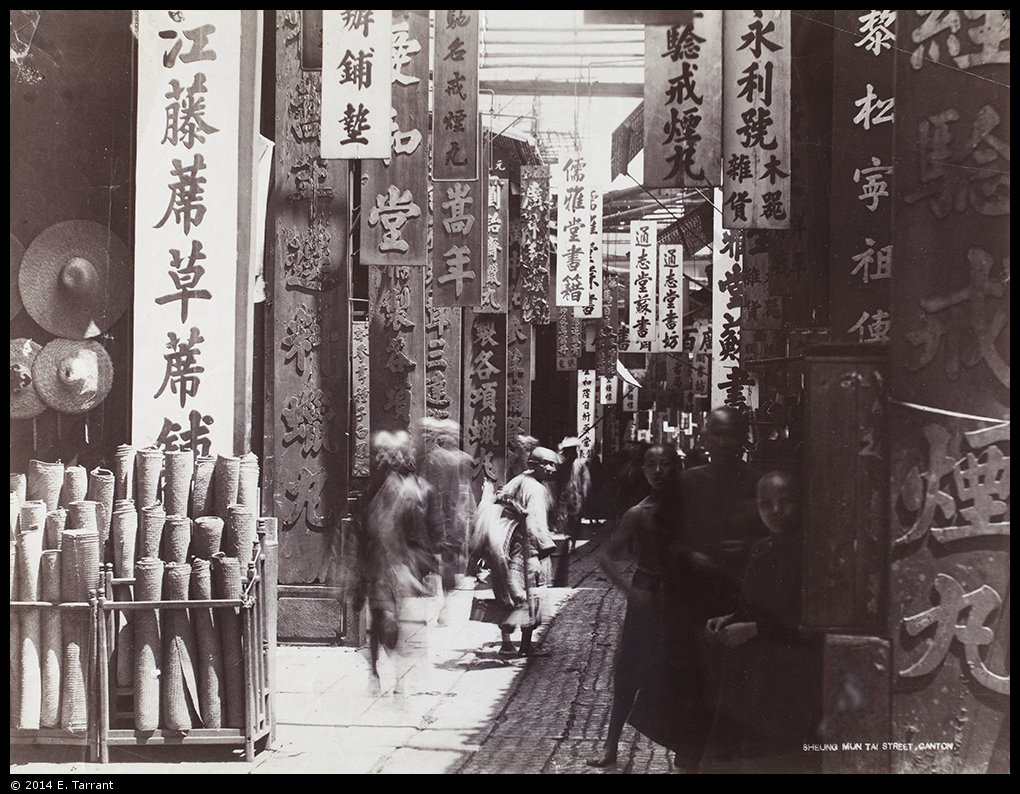
Shops and signboards in a street, Shuang men di, Guangzhou, 1870. Photograph by A. Chan (Ya Zhen), taken in Shuang men di, Sheung or Cheung Mun Tai Street. Image courtesy of Bayley, Arthur Collection and Historical Photographs of China, University of Bristol (www.hpcbristol.net).  广州双门底,即今北京路,约摄于1870年。
As one of the largest and oldest foreign trade ports in China and a starting point of the ancient Maritime Silk Road, Guangzhou, a major commercial and trading center in China, has long been known as a millennium commercial capital. The city’s unique geographical location has contributed to its flourishing commerce, which in turn embeds inclusiveness and openness in the city's DNA.
作为中国最大、历史最悠久的对外通商口岸和海上丝绸之路的起点之一,广州一直享有“千年商都”的美誉。从古到今,独特的地理位置孕育了广州“商都”的金字招牌,商业的繁荣则赋予了这座城市包容、开放的个性。
Today, let's probe into the prosperity of Guangzhou over a century ago via some historical photos collected in the 'Historical Photographs of China' project, which was started by the University of Bristol of England in 2006.
今天,我们将走进英国布里斯托大学“中国历史老照片”项目的收藏照片,通过这些珍贵的老照片,一起领略百多年前广州繁荣的商业景象。
1
Bustling port 繁忙的广州港
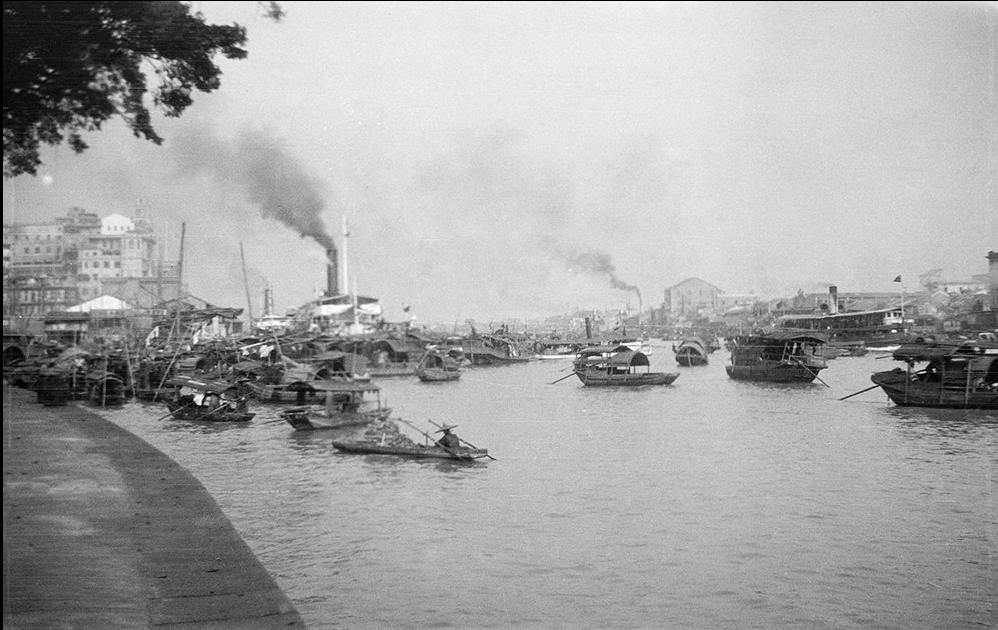
River traffic, Canton, 1923-1924. Image courtesy of Swire, G. Warren Collection and Historical Photographs of China, University of Bristol (www.hpcbristol.net).  繁忙的珠江,约摄于1923-1924间。
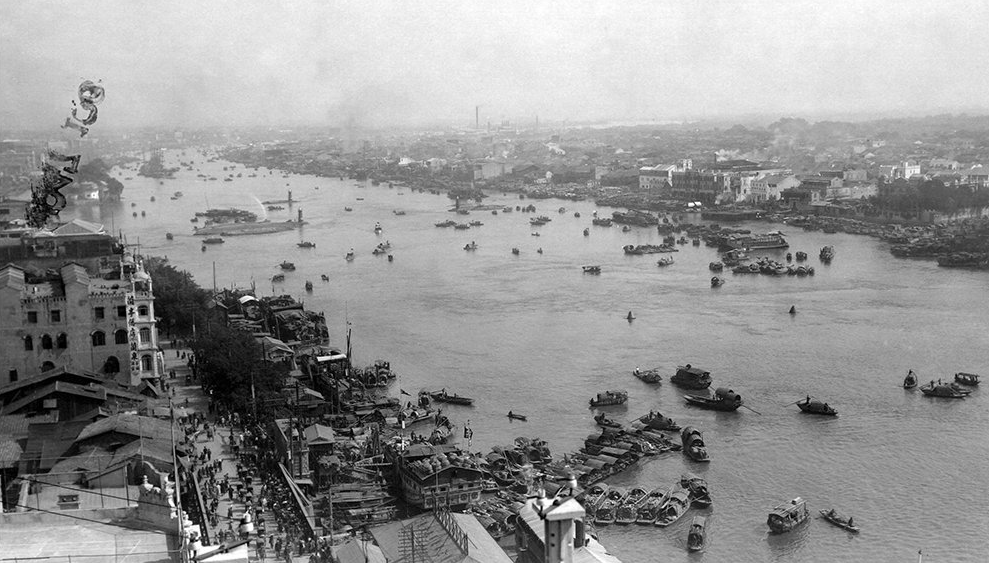
Canton from the Sun Building(Daxin Building, present-day Nanfang Building), 1919-1920. Image courtesy of Swire, G. Warren Collection and Historical Photographs of China, University of Bristol ((www.hpcbristol.net).  从城外大新公司(今南方大厦)俯瞰广州港,摄于1919-1920年。
2
Foreign firms 洋行
After the Opium Wars, more and more foreign firms emerged in Guangzhou. It's recorded that over forty foreign firms were set up on Shameen Island, including the famous Butterfield and Swire Co, Ltd., a British firm founded in 1816 to trade with China and Japan.
鸦片战争后,广州的洋行渐渐多起来。仅在沙面岛上,就有四十多家洋行。其中太古洋行是英国本土著名的财阀集团约翰史维亚股份有限公司所属企业之一。该公司于1816年成立,总部设于英国利物浦,1870年在香港设立太古洋行总行。广州太古分行于1881年开办,行址在沙面英国领事馆侧兴建,是香港总行的广州分行。
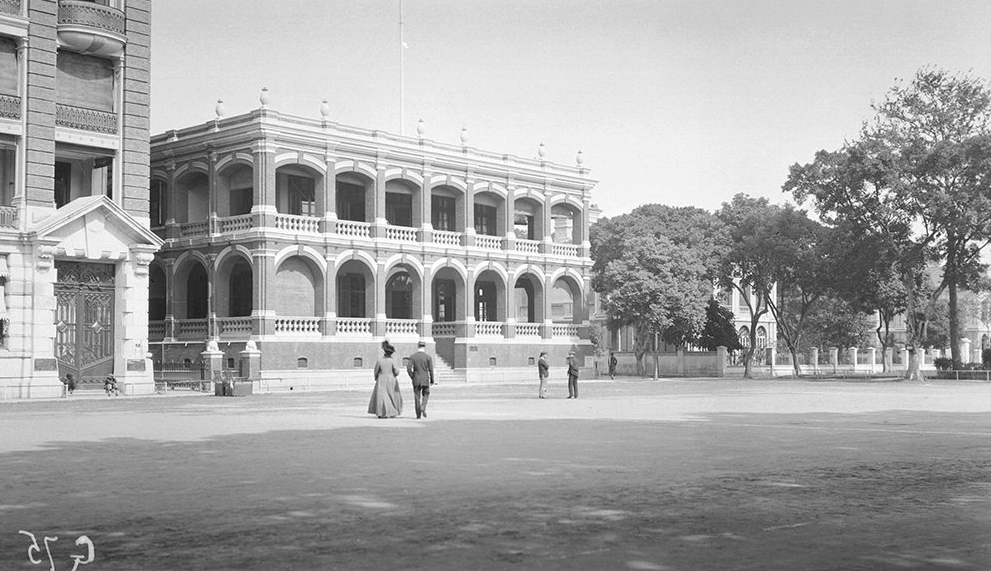
Butterfield and Swire office, Shameen Island, Canton, 1911-1912. Image courtesy of Swire, G. Warren Collection and Historical Photographs of China, University of Bristol (www.hpcbristol.net).  位于沙面岛的太古洋行广州分行,摄于1911-1912年间。
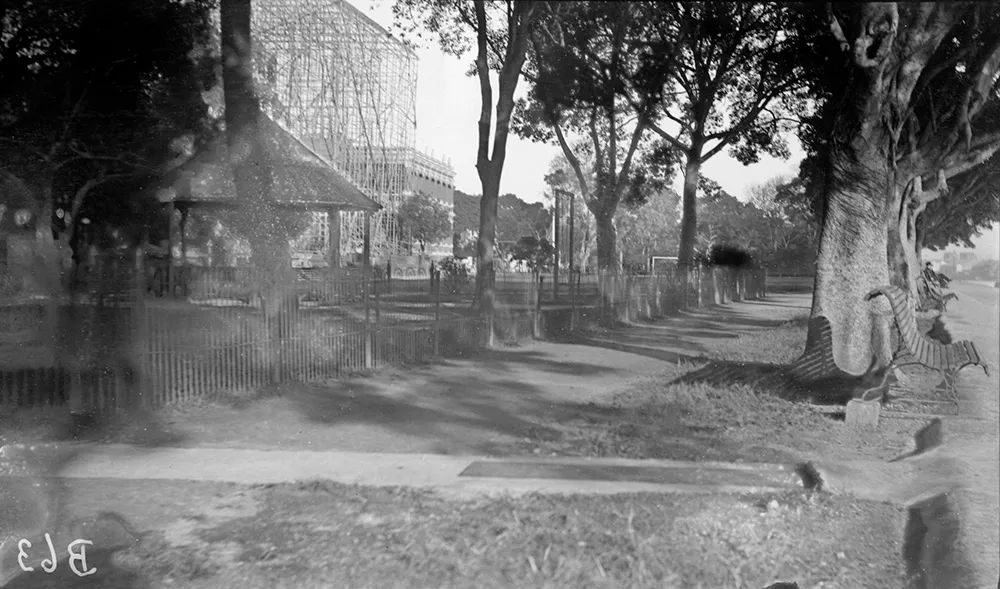
Arnhold Karlberg and Co, Canton, 1906-1907. Image courtesy of Swire, G. Warren Collection and Historical Photographs of China, University of Bristol (www.hpcbristol.net).  德商瑞记洋行,是一家历史悠久的德国籍犹太人公司,为中国清末民初最著名的洋行之一,摄于1906-1907年。
3
Shipping 航运
The establishment of foreign firms in Guangzhou had a great impact on the development of the city's modern industry, as their business activities covered extensive shipping operations as well as manufacturing and other businesses in China. Shipping industry, in particular, got a boost and ushered in a period of rapid development. Among all shipping companies in Guangzhou, Butterfield & Swire. Ltd. was the largest.
前面提到外商纷纷进驻广州沙面,设立了许多洋行,这些洋行对广州近现代工业发展产生了很大的影响。以轮船运输业为例,当时在广州洋行中,大型的轮船公司有4家,分别是外商太古、怡和(又称为渣甸洋行)、日清以及华南招商局,其中以英国太古轮船公司的规模最大。
In partnership with the Hong Kong, Canton & Macao Steamboat Company, a British merchant shipping and maritime trading company founded in 1865, Butterfield & Swire. Ltd. engaged in the shipping business and built the Butterfield & Swire's Godowns in today's Haizhu district. The Godowns, locally known as Taigucang Wharf, was the largest of its kind in Guangzhou back then.
太古洋行广州分行通过与英资企业省港澳轮船公司合作,经营航运业,并在广州现海珠区建成了仓储面积最大的码头和货仓——太古仓码头,逐渐成为了广州外资航运业的首位。
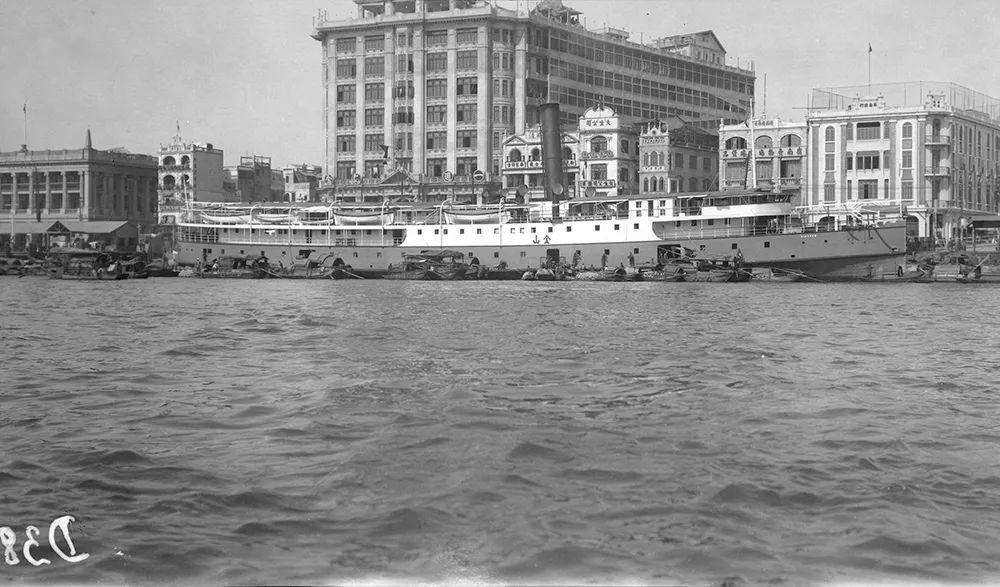
S.S. 'Kinshan' at the bund, Canton, 1919-1920. Image courtesy of Swire, G. Warren Collection and Historical Photographs of China, University of Bristol (www.hpcbristol.net).  停泊在长堤边上的“金山号”客货轮,为太古洋行经营的省港澳轮船公司旗下轮船,摄于1919-1920年间。
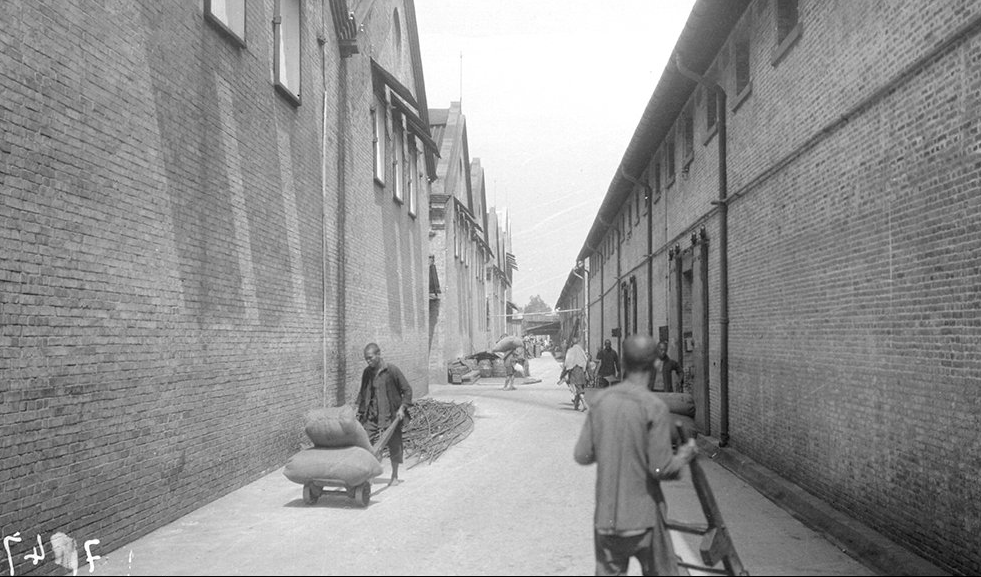
Porters in alleyway between godowns and sheds, Canton, 1923-1924. Image courtesy of Swire, G. Warren Collection and Historical Photographs of China, University of Bristol (www.hpcbristol.net).  太古仓码头内,正在搬运货物的工人们,摄于1923-1924年间。
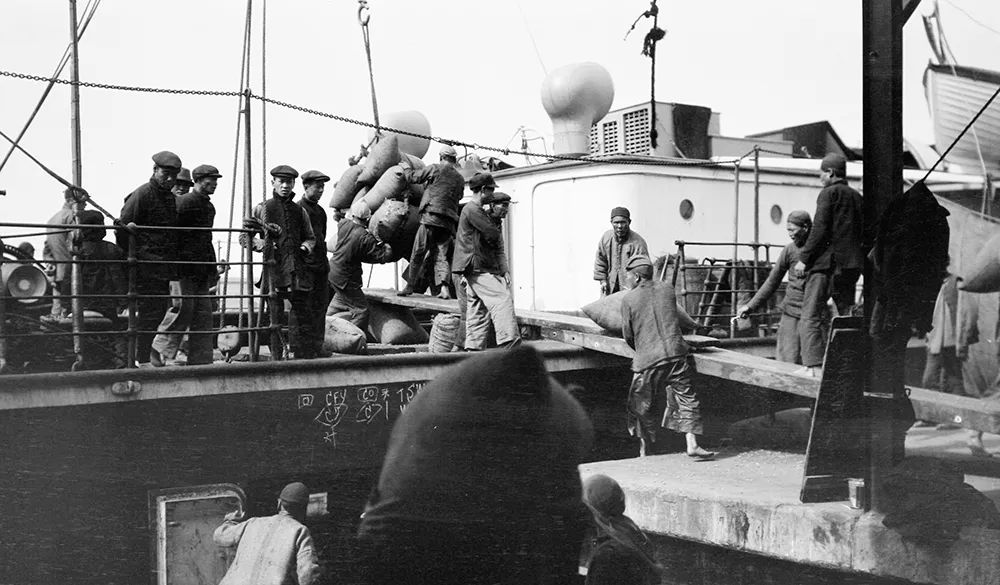
Stevedores (un)loading sacks, Canton, 1911. Image courtesy of Swire, G. Warren Collection and Historical Photographs of China, University of Bristol (www.hpcbristol.net).  广州,忙着装卸货物的工人们,摄于1911年。
4
Department stores 百货
Located on the north bank of the Pearl River, Changdi, also known as the Bund of Canton (Guangzhou), once was a prosperous area in Guangzhou. There used to be many time-honored restaurants and department stores, such as Daxin Department Store, one of the biggest and most prestigious department stores in the 1910s.
长堤,位于珠江北岸,沿长堤大马路、沿江路一带,大致东起北京南路,西接人民南路,长约2公里,是广州昔日的繁华地带,商业兴旺,有众多老字号酒家与百货公司,例如大新百货公司。
In the spring of 1912, Cai Chang, a Cantonese born in Xiangshan County( in present-day Zhuhai), raised 4 million Hong Kong dollars to open Daxin Department Store on the bustling Des Voeux Road Central in Hong Kong.
大新百货公司于1912年春由广州香山县(今属珠海市)人蔡昌,集资400万港元在香港繁华的德辅道开设。
After gaining a firm foothold there, Cai set up a Daxin branch in Guangzhou in 1916 at Hui'ai Zhong Lu (now Zhongshan Wu Lu) and built the 12-storey Daxin Building along the Changdi, which was the tallest building in China at that time. Now the grand building is known as Nanfang Building and is a hot place for electronic products.
在香港站稳了脚跟后,蔡昌于1916年在广州惠爱中路(今中山五路)设立大新分店。两年后,他又在广州西堤的珠江边,兴建规模宏大、拥有12层楼高的城外大新公司,也就是今天的南方大厦。
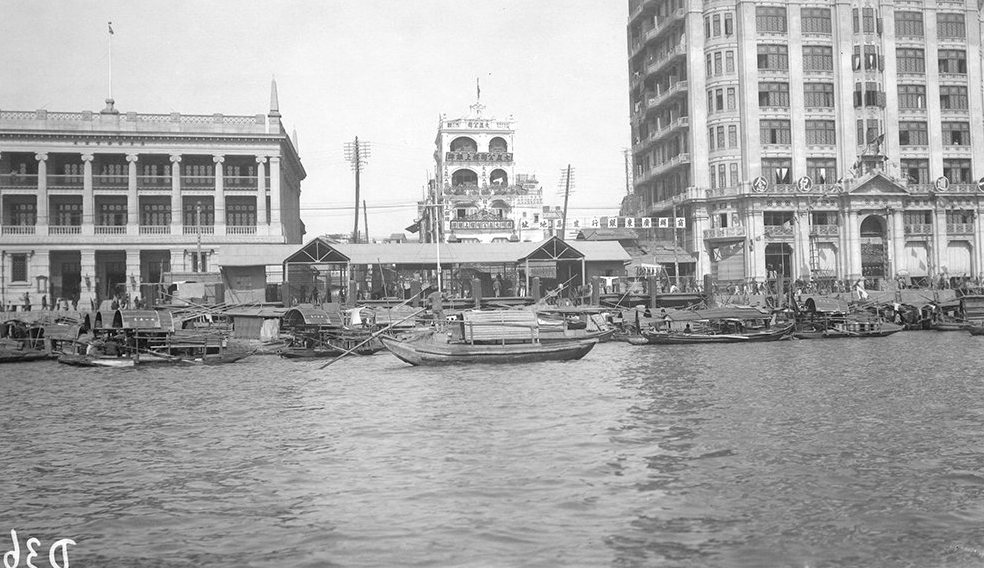
The Bund and Daxin Building in Canton, 1919-1920. Image courtesy of Swire, G. Warren Collection and Historical Photographs of China, University of Bristol (www.hpcbristol.net). 
 广州长堤和城外大新公司(今南方大厦),约摄于1919-1920年间。
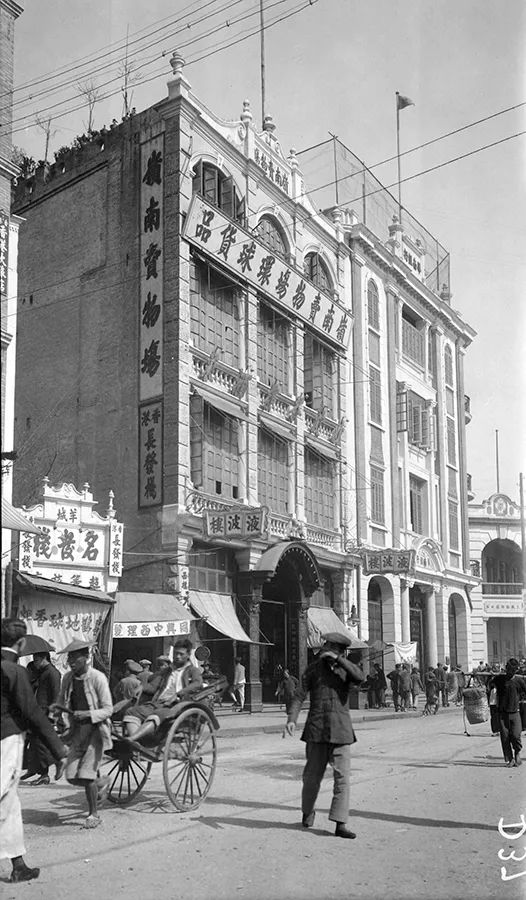
Ling Nam shop (around today's Cultural Park), Canton, 1919-1920. Image courtesy of Swire, G. Warren Collection and Historical Photographs of China, University of Bristol (www.hpcbristol.net).  广州岭南卖物场(今文化公园一带),约摄于1919-1920年间。
5
Commercial streets and stores 商业街、街头小铺
Guangzhou, as the only port in China opened to foreign trade in the late Qing Dynasty, also witnessed the development of photography in China. Major commercial streets and stores in the city were popular shooting locations for western artists. Take the Shuang men di (present-day Beijing Road Pedestrian Street) as an example.
广州城作为晚清摄影史的“重镇”,其重要商业街和街头小铺,也成为西方艺术家们争先“打卡”的取景地。例如,双门底,有着“岭南第一街”的盛誉,曾处于老广州城的中轴线,市井繁华,商贾云集,以卖书坊、古董市、花市最为著名。
Shuang men di was located on the ancient central axis of Guangzhou city, and was known for selling books, antiques, plants and flowers. Every year on Chinese New Year's Eve, there would be flower fairs at Shuang men di. The place changed its name several times, from Yongqing Road to Yonghan Road, and was officially named Beijing Road in the 1960s.
在双门底,每到除夕就会摆花市,可谓当代广州人除夕行花街习俗的鼻祖。之后,“双门底”名字几次更迭,从永清路到永汉路,上世纪60年代正式叫做北京路。
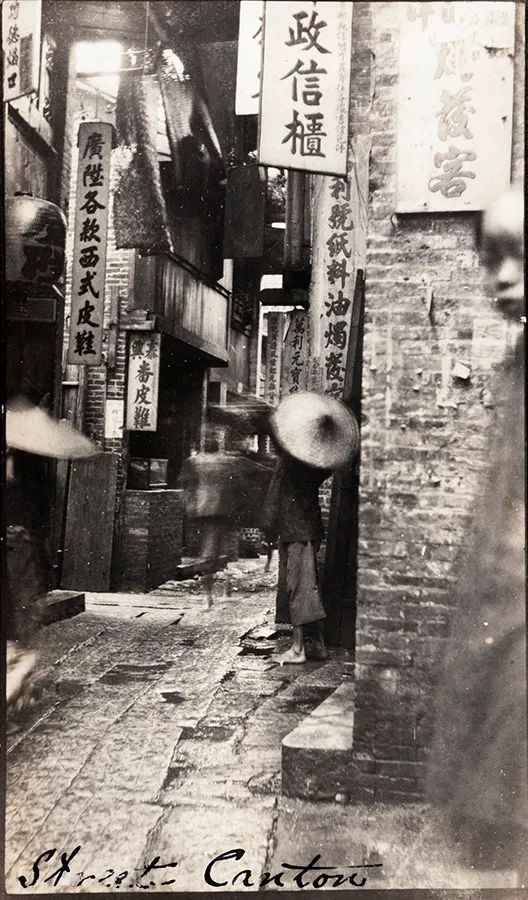
A shopping street, Guangzhou, 1912-1917. Image courtesy of Mitchell, Eleanor Collection and Historical Photographs of China, University of Bristol (www.hpcbristol.net).  广州商业街道,可见西式皮鞋、纸料油烛等行业,约摄于1912-1917年间。
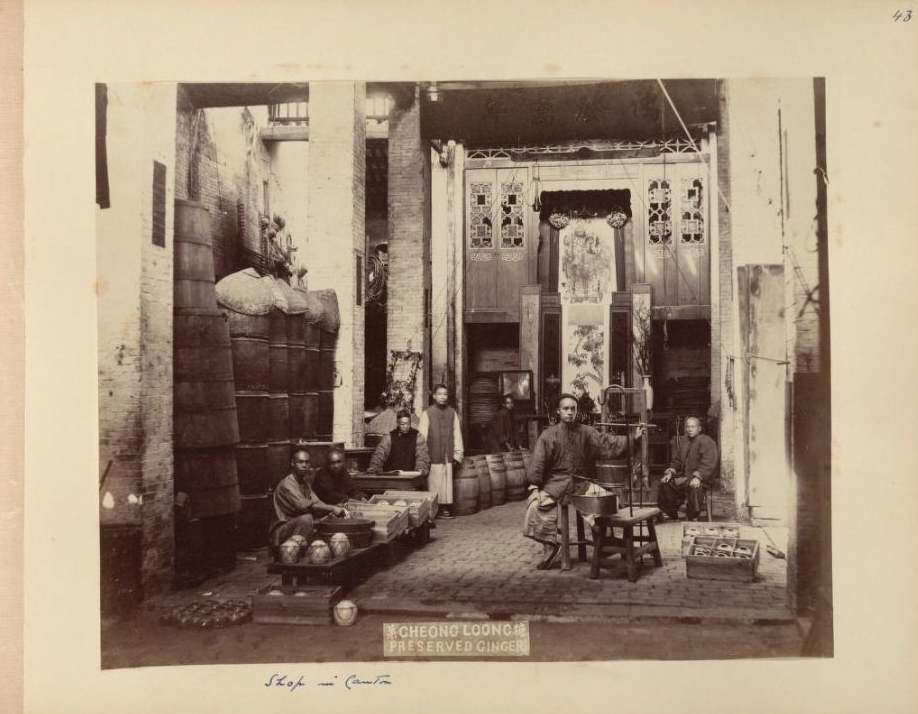
A shop in Canton (Guangzhou) selling preserved ginger, 1895. Image courtesy of Edward Bangs Drew Collection and Historical Photographs of China, University of Bristol (www.hpcbristol.net).  广州一家店铺,商人们正在卖腌制的生姜,摄于1895年。
6
Photo studios 照相馆
Camera was invented in France in 1839 and then popularized in Europe. In 1844, camera was introduced to Canton, but the first photo studio in China was opened in Hong Kong by an American in 1845. Seeing this as a good business opportunity, many foreigners started opening photo studios in Chinese cities, including Canton(Guangzhou), Hong Kong and Macao.
照相机于1839年在法国问世,后经过不断改良,风行于欧洲。1844年,广东人初识照相机,1845年,中国第一家商业照相馆就出现在了香港街头。这家照相馆的老板是个名叫乔治·韦斯特的美国人。随后,一些商业嗅觉灵敏的洋人纷纷来到粤港澳,开设照相馆,招揽生意。从19世纪70年代开始,本地人开设的照相馆在市面上次第出现。这些人大多在洋人开设的照相馆里帮过工,掌握了“核心技术”后就另立门户。
After working with and learning from western photographers, some locals started to run their own photo studios in Guangzhou in the 1870s. Ya Zhen's studio, a Hong Kong-based photo studio, set up a branch in the Heavenly Peace Street (present-day Tiancheng Road, Yuexiu district), Guangzhou in the late 19th century, and played an indispensable role in the development of photography in China.
雅真照相馆,总部开设于香港,是早期重要的中国照相馆,于19世纪末在广州开设分店,地址坐落在天平街(现越秀区天成路)。
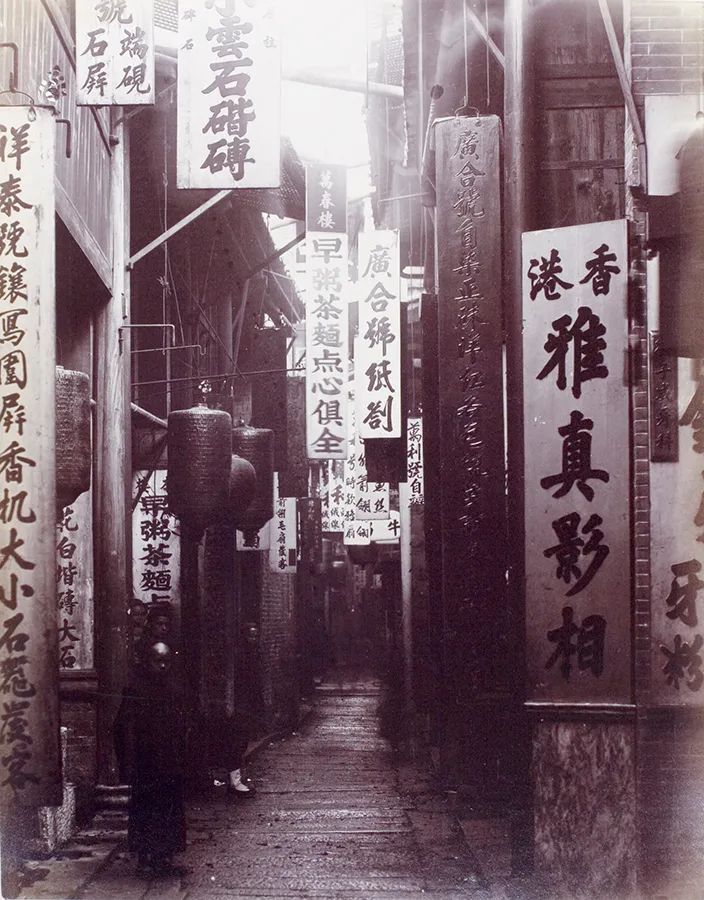
Ya Zhen's studio and other shops, Heavenly Peace Street, Guangzhou, 1881-1897. Image courtesy of University of Bristol Library Collection and Historical Photographs of China, University of Bristol (www.hpcbristol.net).  广州雅真照相馆和天平街,约摄于1881-1897年间。
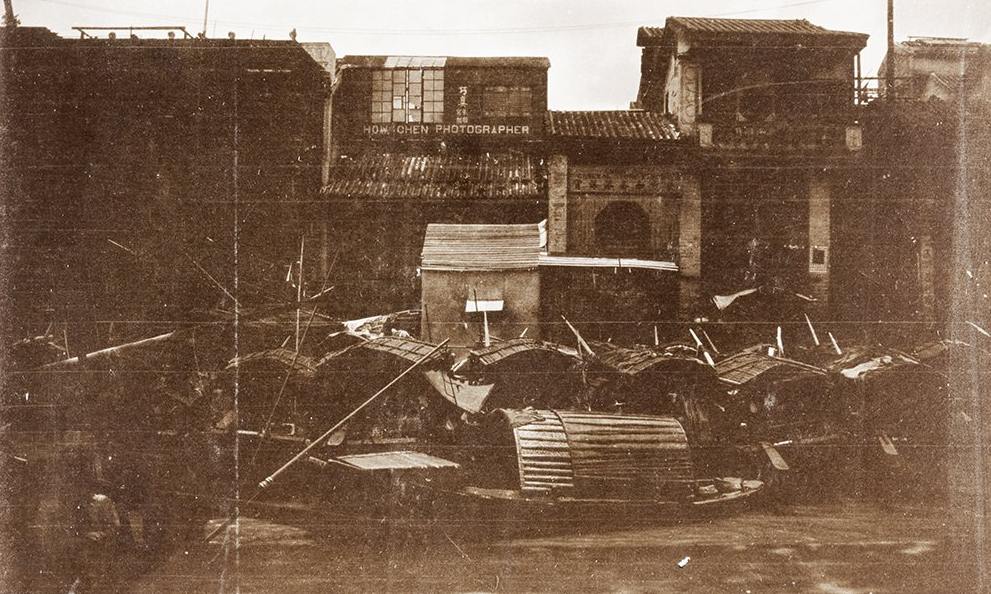
广州巧真照相馆,照相馆右边是一家经营洋货的店,摄于1911年5月22日。Qiaozhen (How Chen) photography studio, Guangzhou (广州), Monday 22 May 1911. Image courtesy of Billie Love Historical Collection and Historical Photographs of China, University of Bristol (www.hpcbristol.net).
7
Pawn industry 典当行
During the Ming and Qing dynasties, pawn industry of Guangzhou was quite prosperous, with more than 400 pawnshops in the city. The pawnshops often were shaped like Diaolou, a multi-storey watchtower, and featured black brick walls and narrow windows.
明清时期,广州典当业大为兴盛。据不完全统计,最多的时候,有400多间当铺遍布在广州城内。这些当铺多为高耸的碉楼式建筑,厚实的青砖墙和窄小而不乏威严的气窗也是它们的主要特点。
Located in the west part of Guangzhou city, Xiguan Pawnshop had an exterior design inspired by Wok yi uk (镬耳屋 in Chinese, literally "house with wok ears"), a typical type of Lingnan architecture. The pawnshop was the tallest of its kind in the city, but unfortunately it had vanished without a trace.
位于广州城西的西关大押,是昔日广州城内最高的当铺,其建筑体外部带有具有传统岭南特色的“镬耳”。可惜的是,西关大押现已不存。
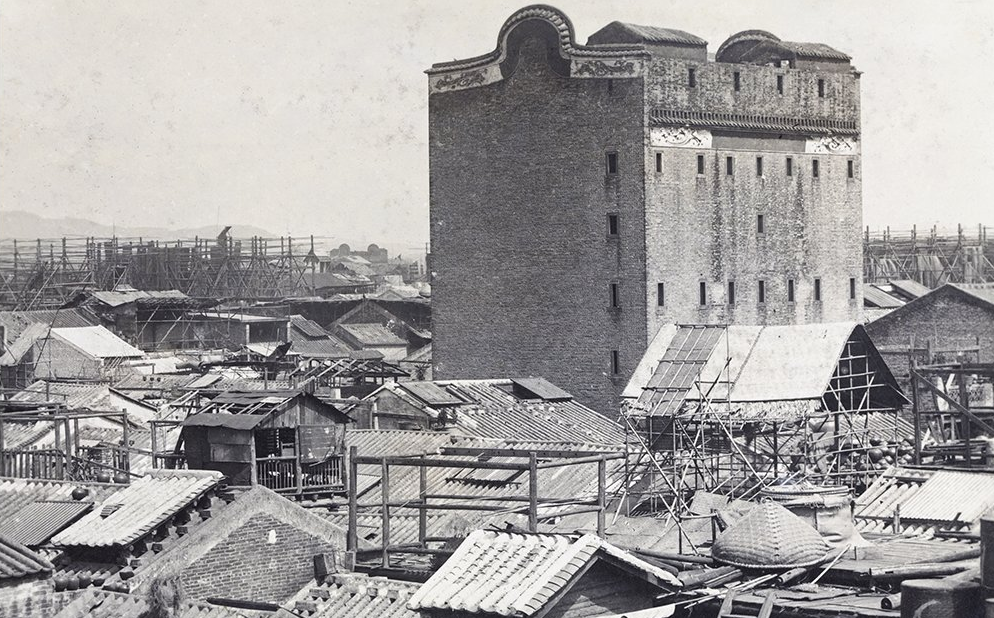
A pawnbroker's warehouse, Canton, 1900-1905. Image courtesy of Trobridge, George Collection and Historical Photographs of China, University of Bristol (www.hpcbristol.net).  广州西关大押,摄于1900-1905年间。
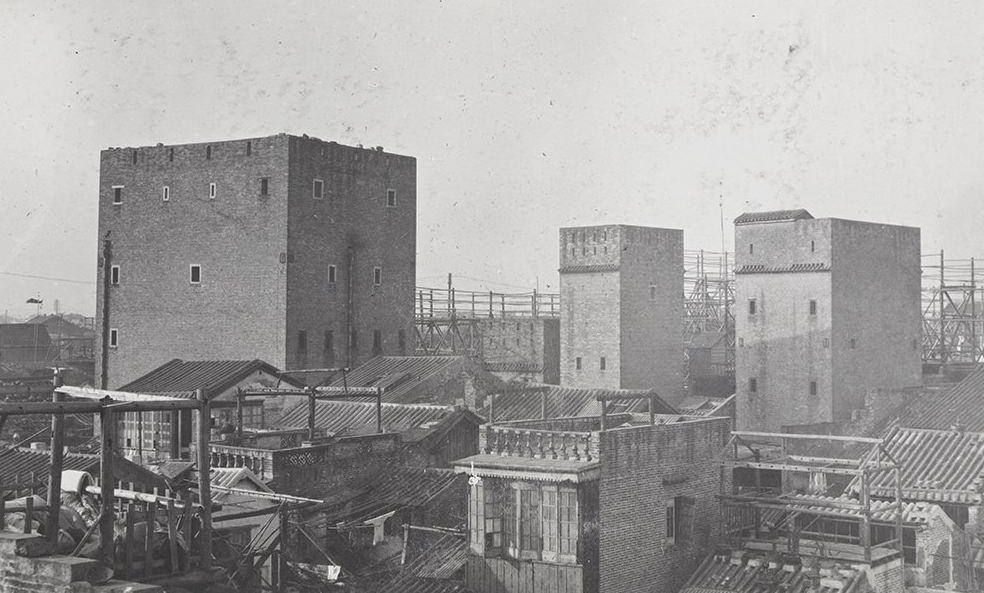
Pawnbrokers warehouses, Canton, 1921. Image courtesy of Trobridge, George Collection and Historical Photographs of China, University of Bristol (www.hpcbristol.net). 广州当铺,摄于1921年。
Author: Yuan
Supervisor: Lv Yun
Editor: Lv Yun
Source: GZ-Maritimesilkroad (丝路云帆Silu Yunfan), official Wechat account of City Alliance for the Preservation and world Heritage Inscription of Maritime Silk Road Heritage
Courtesy: Historical Photographs of China, University of Bristol (www.hpcbristol.net), Guangzhou Municipal Bureau of Culture, Radio, Film and Tourism