Nowadays, it is usual to see crowds of customers waiting outside some restaurants of Guangzhou in early mornings for 'Zaocha (Cantonese morning tea)'. But in such a city full of particular foodies, what qualities are necessary for restaurants to remain popular with time passing by?
Today, let's explore the stories of some time-honored traditional restaurants in Guangzhou.

Founded by businessman Huang Chengbo in 1880 during Emperor Guangxu's reign in the Qing Dynasty, Tao Tao Ju (Tou Tou Koi) Restaurant started its business around today's Dishifu Lu in Liwan district. It is said that the restaurant was named Pu Tao Ju Restaurant at first after Huang's wife Pu Tao (meaning grape in Chinese).
But the business closed down for quite a period of time after Huang passed away and did not resume until 1927 when Tan Jienan, a tycoon in the catering industry, took over the restaurant. Due to a lack of fund, Tan had to resort to an old-style Chinese private bank, whose owner changed the name of the restaurant to Tao Tao Ju.
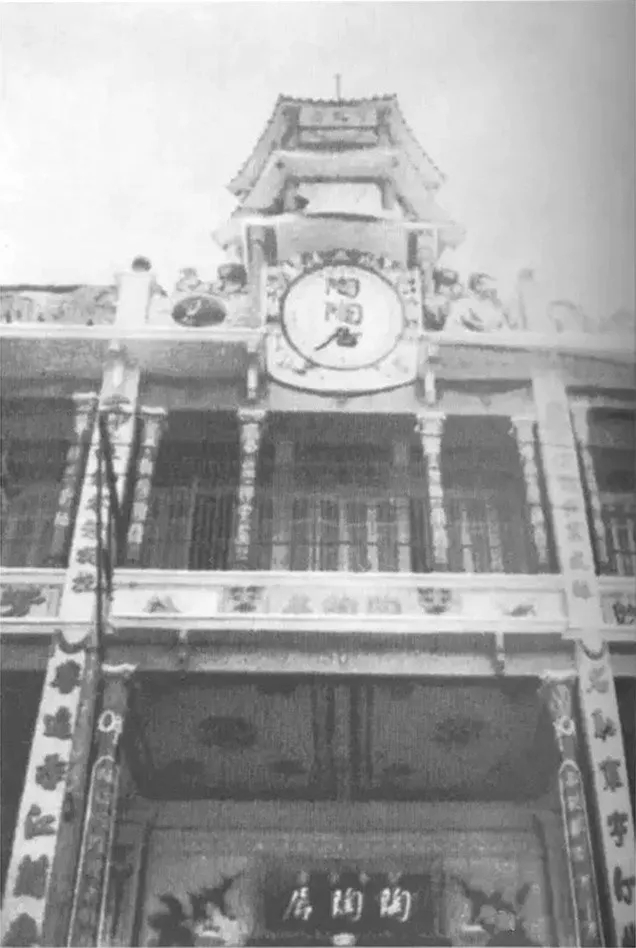
Tao Tao Ju (Tou Tou Koi) Restaurant in the Republic of China era
During the late Qing Dynasty and the early Republic of China era, Tao Tao Ju Restaurant started to serve first-class tea brewed with mountain spring water in teapots from Yixing city of Jiangsu province on stoves made in Chaozhou city of Guangdong, which both stood for exquisite craftsmanship.
The restaurant also adopted western food-matching style, serving meals comprised of crab meat, shark fin soup, vegetables, fried rice or noodles, with fruits and snacks at a reasonable price, which were popular with customers.
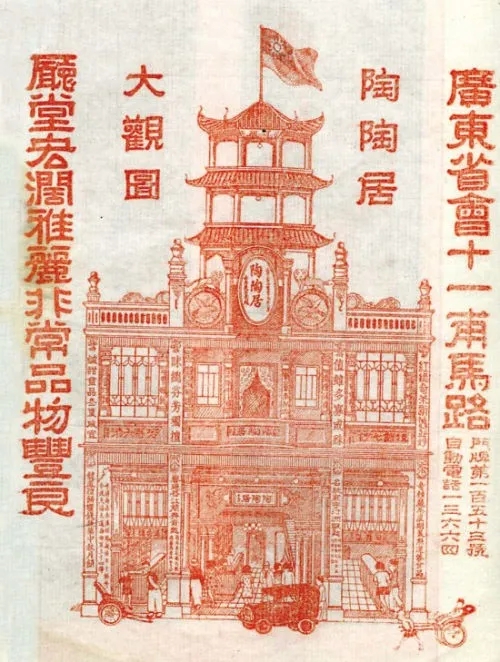
Tao Tao Ju (Tou Tou Koi) Restaurant enjoyed a good reputation in the Republic of China era.
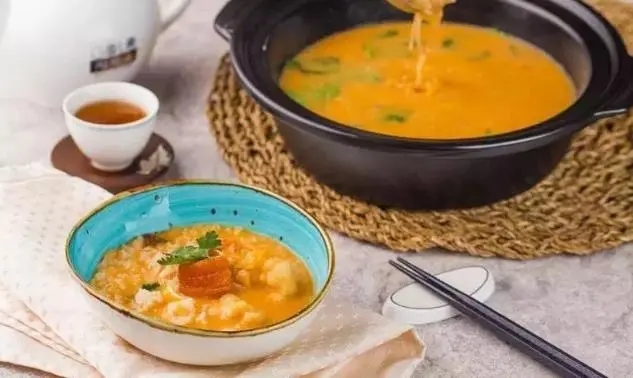
Rice in Soup with Lobster is one of the classic dishes of Tao Tao Ju (Tou Tou Koi) Restaurant.
With a number of signature dishes, Tao Tao Ju Restaurant has gained wide recognition not only in Guangzhou, but also in Hong Kong, Macao and Southeast Asia. In 2006, it was granted the title of time-horned brand of China. It ranked top on the list of Guangzhou's 10 most popular 'morning tea' restaurants published by market consultancy iiMedia Research in 2019.

Lian Xiang Lou (Lin Heung Lau) Restaurant was first established as a pastry shop by Chen Weiqing in the fifteenth year of the reign of Emperor Guangxu in the Qing Dynasty (1889). At the very beginning, the restaurant rose to fame because of its pastry stuffed with lotus seed paste, which was the rudiment of famous Cantonese-style mooncakes.
By the middle of the reign of Emperor Guangxu, three branches of the restaurant were set up in Kowloon district of Hong Kong while in 1910, Lian Xiang Lou expanded its business scope to cover teahouses.
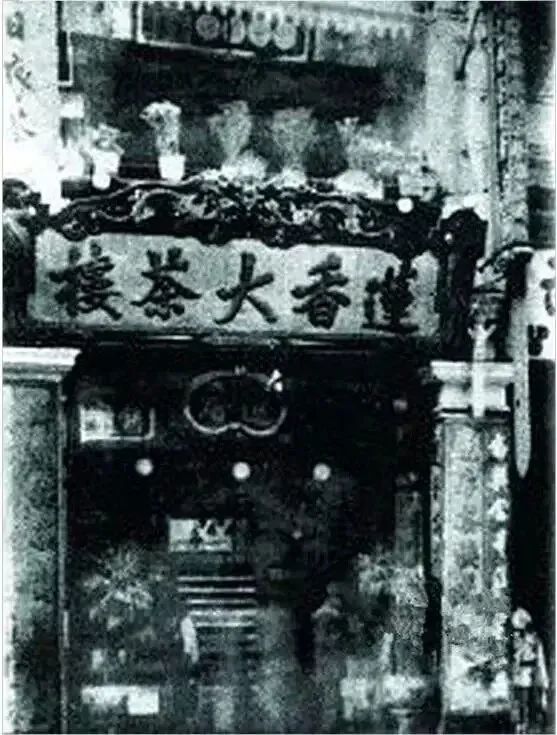
Lian Xiang Lou Restaurant (Lin Heung Lau Tea House) located on Dishifu Lu of Xiguan areain Liwan district of Guangzhou in the 1940s.
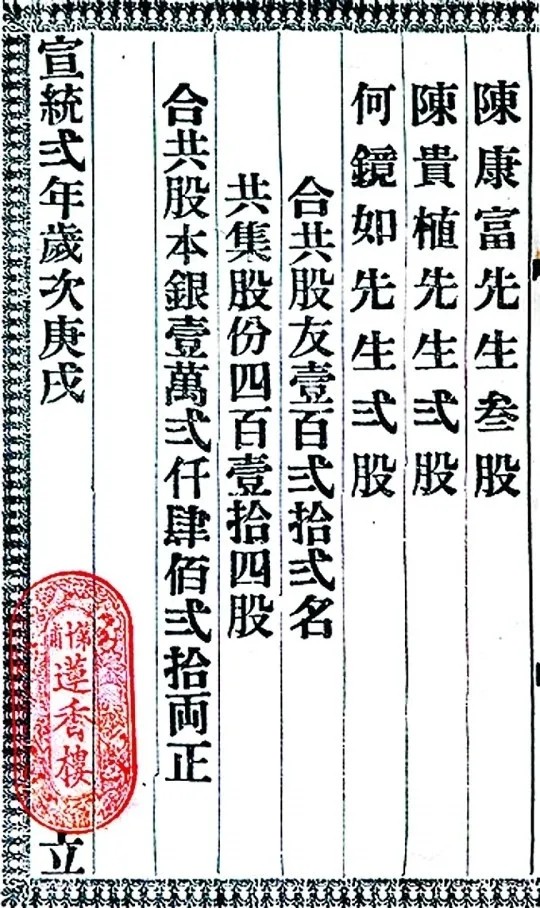
Register of shareholders of Lian Xiang Lou (Lin Heung Lau) Restaurant in 1910.
Lian Xiang Lou (Lin Heung Lau) Restaurant enjoys a good reputation for its sweet pastry which was served as snacks on wedding receptions of wealthy families in Xiguan area.
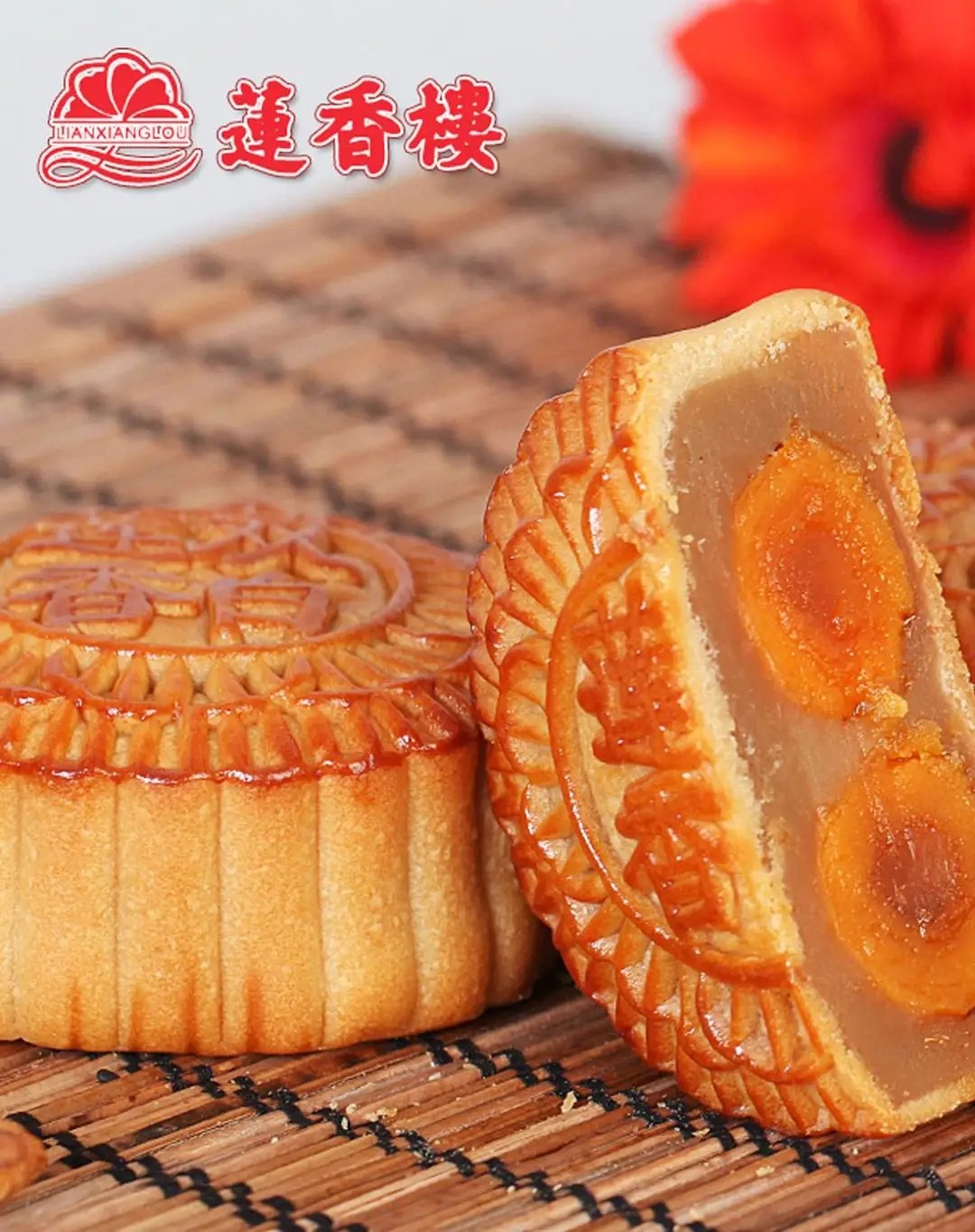
Mooncakes mixed into white lotus seed paste produced by Lian Xiang Lou (Lin Heung Lau)
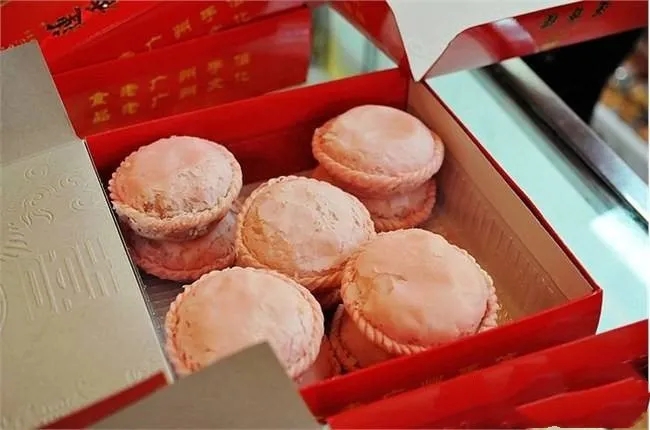
Signature wedding pastry produced by Lian Xiang Lou (Lin Heung Lau)
Another signature snack was its pork biscuit. Integrated with minced garlic, fermented red beancurd, gingili as well as lard, the delicacy leaves a pleasant aftertaste.
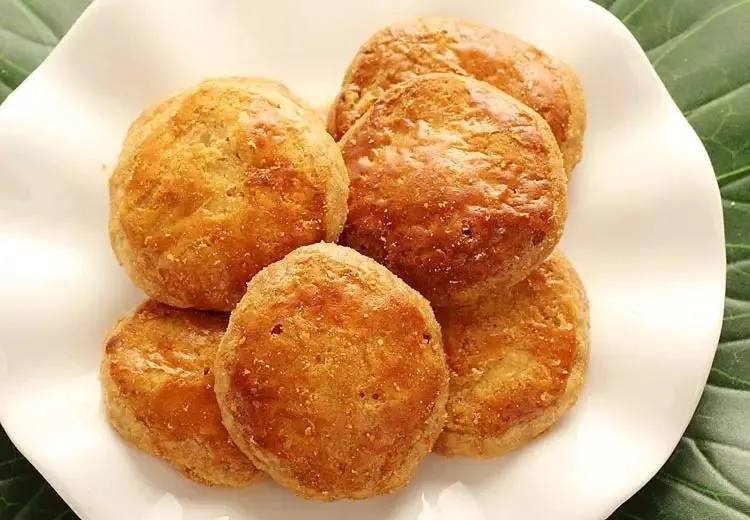
Pork biscuits produced by Lian Xiang Lou (Lin Heung Lau)
In 1999, the restaurant was elected as one of the top-class restaurants of China. It developed a modern operation and management system in 2006 while maintaining the old name and its original flavor.

北园酒家 Beiyuan Restaurant
Beiyuan (North Garden) Restaurant is one of a handful of old-schooled Lingnan garden restaurants left in Guangzhou. Built in 1928, it was formerly a private residence of Zou Dianbang, the former president of Guangzhou General Chamber of Commerce.
The restaurant had nice surroundings and a peaceful ambience enlivened by the splash of lanterns as well as trees and bamboos, which were even praised by Liang Sicheng, a renowned Chinese architect and architectural historian. Besides, a calligraphy work of Liu Haisu, a master Chinese artist, praising the great taste of the restaurant's dishes, is engraved on a plaque at the gate.
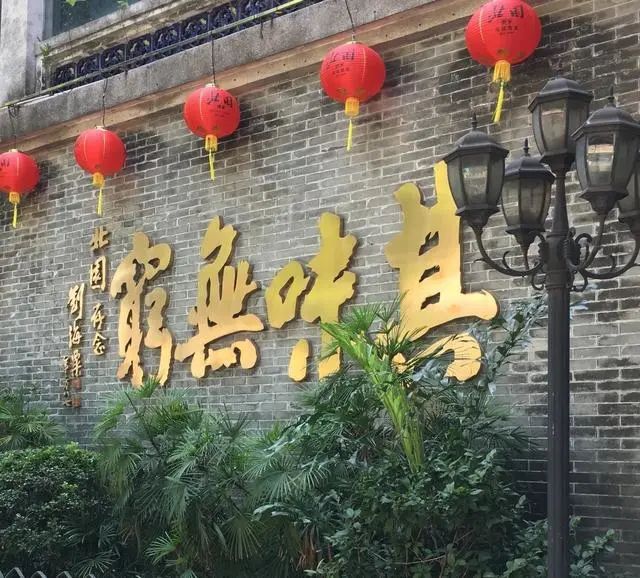
A calligraphy work praising the great taste of the restaurant's dishes written by Liu Haisu, a master artist, can still be seen at the gate of Beiyuan Restaurant now.
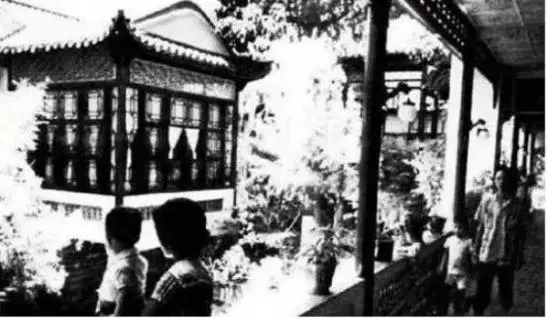
Beiyuan Restaurant is an old-schooled Lingnan garden restaurant.
In the 1940s, Beiyuan Restaurant was famous for its chicken dishes cooked in various ways such as stir-frying, braising, deep-frying and stewing, from which customers were free to choose three.
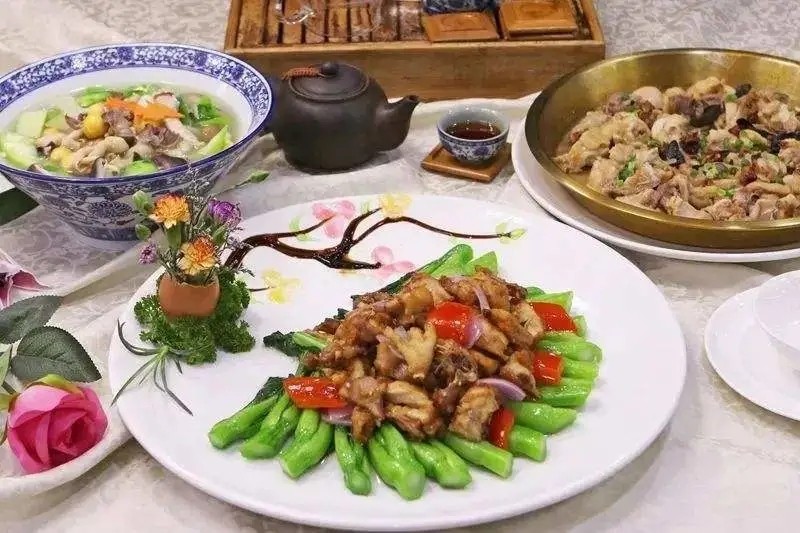
Chicken dishes cooked in various ways served by Beiyuan Restaurant
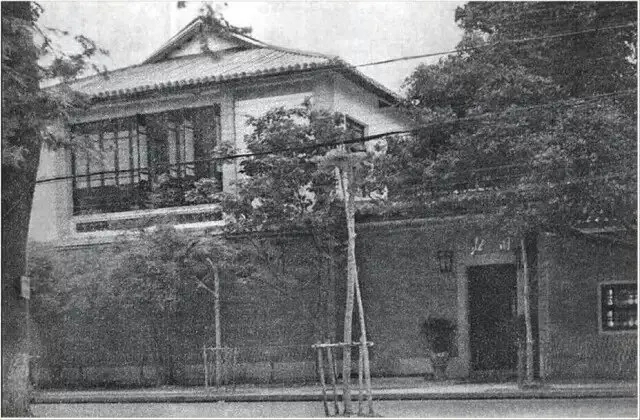
Beiyuan Restaurant in the Republic of China era
Just like Lian Xiang Lou Restaurant, Beiyuan Restaurant was listed as one of the top-class restaurants of China in 1998 while five years ago in 1993, it was already awarded with the title of time-honered brand of China.

In 1885, Tai Ping Guan (Tai Ping Koon) Restaurant was set up by Xu Laogao, a former chef of a foreign firm in Shameen, or Shamian, a sandbank island where foreign firms and more than 150 European-style buildings gathered.
Xu started his business as a stall keeper before turning the stall into the first western-style restaurant run by Chinese in the country. The restaurant branched out to Wan Chai and Sheung Wan districts of Hong Kong in 1936 and to Dishifu Lu of Guangzhou in 1944.
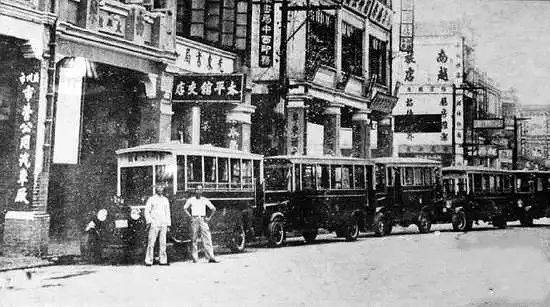
The sign of Tai Ping Guan (Tai Ping Koon) Restaurant in the Republic of China era
Tai Ping Guan used to host a raft of important reception events which involved politicians and celebrities from different professions. Some noted writers and artists, such as Lu Xun, Guo Moruo and Yu Dafu, also dined in the restaurant.
Another fan of Tai Ping Guan was the late Premier Zhou Enlai, who first dined in this restaurant in 1925 with friends and his newly-wed wife Deng Yingchao.
Braised pigeon has always been the special of the Tai Ping Guan. Other dishes include baked crab in shell, schweinshaxe (a German dish of roasted pork knuckle), baked "Portuguese" chicken, Chinese abalone and braised salty ox tongue. Several years ago, customers were even able to treat themselves to the exact dishes Premier Zhou Enlai and his wife Deng Yingchao used to order.
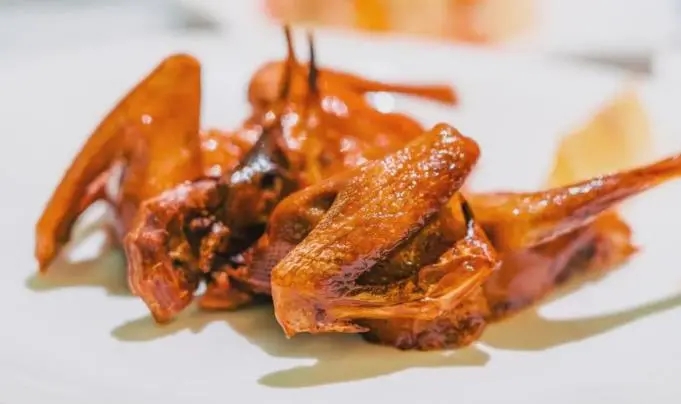
Braised pigeon produced by Tai Ping Guan (Tai Ping Koon) Restaurant
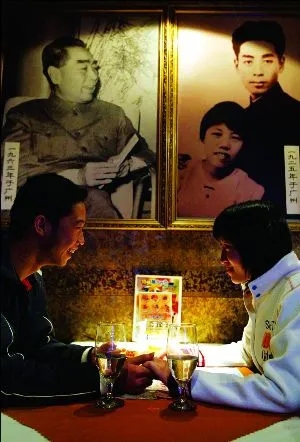
Photos were hung up on walls in Tai Ping Guan (Tai Ping Koon) Restaurant in memory of Premier Zhou Enlai and his wife Deng Yingchao.
In 2002, the management of Tai Ping Guan (Tai Ping Koon) Restaurant was passed on to Guangzhou Dongjiang Catering Group, allowing the time-honored brand to carry on its past glory.
As time goes by, these time-honored restaurants have been reckoned as "business cards" of Guangzhou in terms of cuisine, attracting customers with yummy food and the charms of traditional food culture invested in time-honored brands.
Editor: Becky
Source: 丝路云帆